Product Details
Welcome to HONGKONG OMK ELECTRONICS CO., LIMITED official website!
- Scan for Mobile Store

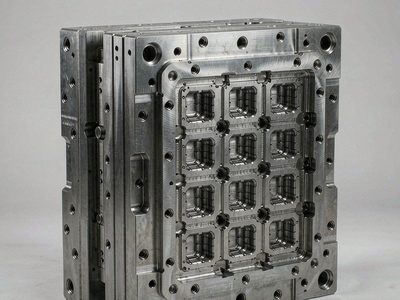
Mold manufacturing, Custom injection molding, Plastic molds

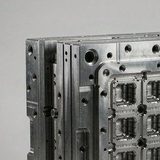
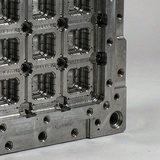
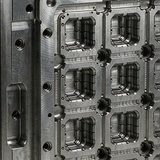

Price¥12000.00
MOQ1 setStock:0 set
 Company Card
A plastic pallet mould is one of the largest tools in plastics manufacturing: a single mould can weigh several tonnes and run for a decade on high-volume pallet lines. The difference between a productive pallet tool and an expensive piece of scrap is decided before the first cut of steel — by how the mould is engineered for the resin, the pallet format and the press it will live on. This page explains what pallet tooling involves, the formats that dominate, and what to confirm with a plastic pallet mould supplier before a tool order is placed.
Two construction families cover most of the market. Single-face (nine-foot) pallets have one moulded deck and use stringers underneath, so the mould is shallower and cheaper. Double-face, reversible pallets mould both decks in one shot, which needs a two-sided tool with a central core lift and a much larger press. Around these sit the regional formats: the 1200x800 mm euro pallet, the 1200x1000 mm block pallet common in Asia, and the 48x40 inch GMA stringer pallet for North America. Each format implies a different mould footprint, ejector layout and cooling strategy, so a supplier experienced in one is not automatically competent in another.
HDPE pallet moulding runs long cycles by industry standards — commonly 90 to 180 seconds, driven by wall sections of 4 to 8 mm and the need for dimensional stability on cool-out. High shot weight demands generous runner and gate design to avoid jetting and weld lines across load-bearing ribs, and venting matters too, because thick sections trap air.
Tooling capability is listed under plastic moulds, and the moulding partners who run pallet programmes appear under custom molding services. Our plastic part design guidelines cover the DFM rules that keep large-format tools productive, and factory credentials can be screened through the supplier directory.
WeChat Support
Mobile Store
