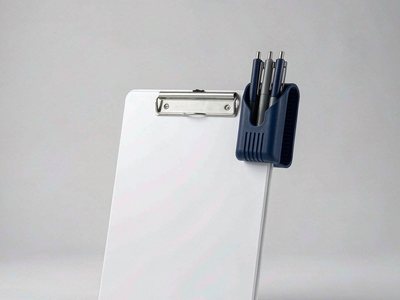
 Plastic Clipboard and Pen Holder
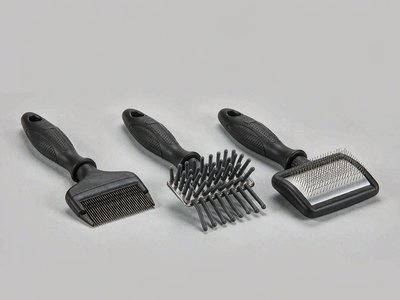 Pet Grooming Comb and Deshedding
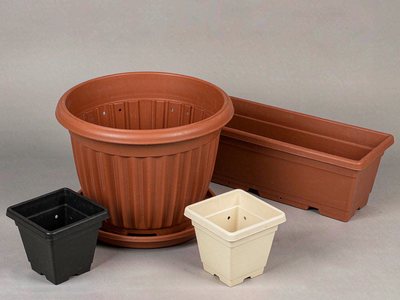 Injection Molded Plastic Planter
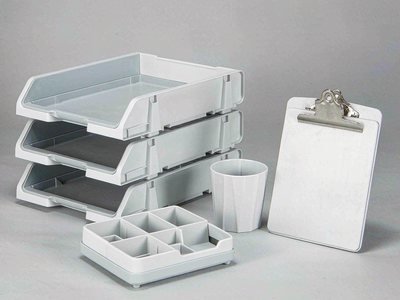 Plastic Desk Organizer and Docume
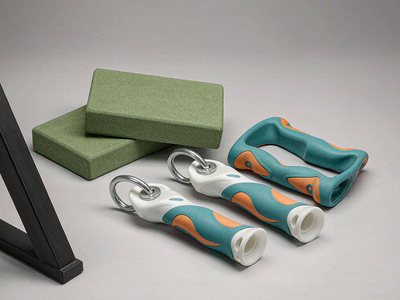 Two-Shot Resistance Handle and Fi
Product Details
Welcome to Shenzhen Everyday Plastics Co., Ltd. official website!
- Scan for Mobile Store

Thin-wall molding, living-hinge design, two-shot handles, retail packing
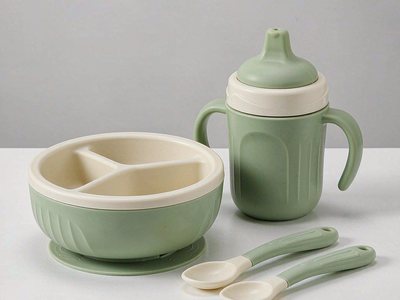



Price¥2.60
MOQ1000 setStock:0 set
 Company Card
Feeding tableware fails in two ways. The suction base lets go and the bowl ends up on the floor, or the material does not survive repeated washing at temperature and the surface goes chalky. Both are material and tool questions, and both are decided before the first shot is moulded.
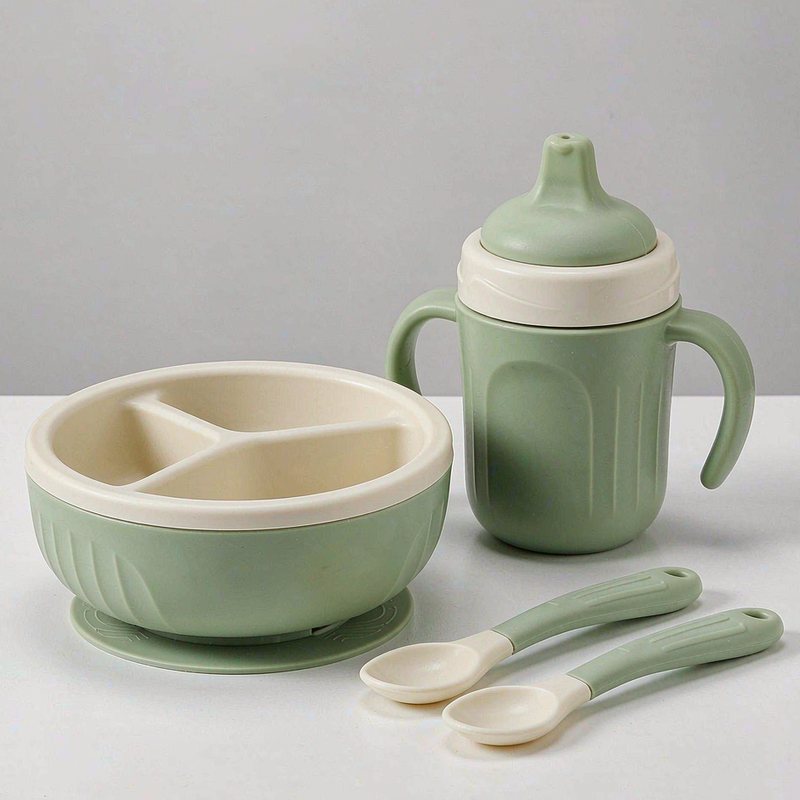
We mould baby feeding sets in food grade PP with a TPR suction base, for baby care brands, nursery chains and private-label sellers.
A suction base that holds needs a flat, slightly domed sealing lip, and the dome has to be kept flat after ejection. If the part cools against a warped core, the lip lifts at one edge and the bowl slides. We cut the base cavity with a separate insert so it can be polished and, if needed, re-cut without touching the bowl tool. The TPR is overmoulded onto a PP ring rather than glued, so it cannot peel away after washing.
| Bowl | 350 ml, 3 divisions, TPR suction base |
|---|---|
| Cup | 240 ml, two handles, PP body with TPR sleeve option |
| Spoon | Soft TPR tip, PP handle, 14 cm |
| Material | Food grade PP, BPA free; TPR free of phthalates |
| Temperature | -20 to 110 C, dishwasher safe on the top rack |
| Packing | Colour box or a printed set bag |
| MOQ | 1,000 sets per colourway |
Material declarations cover BPA, phthalates, heavy metals and melamine. Food contact compliance is declared to FDA 21 CFR 177.1520 or EU 10/2011 as the buyer's market requires, with migration testing carried out by an accredited laboratory appointed by the buyer. We supply declarations for our material, not certificates in another company's name.
In-mould labelling gives the most durable branding on a bowl that will be washed daily; pad printing is cheaper but wears at the rim over time. Where a buyer wants a full-wrap design on the cup, we recommend a printed PP sleeve rather than a shrink sleeve, because the sleeve survives dishwashing and can be replaced on a reorder without reprinting the cup.
Sets for the EU market are usually packed with a multilingual care card and a QR code to a digital manual. US buyers increasingly ask for a prop 65 warning label even where the material is compliant, because the requirement is triggered by the retail channel rather than the product itself.
Tel:
Mobile:
Email:
Address: Bao'an District, Shenzhen, Guangdong, China
WeChat Support
Mobile Store
