Product Details
Welcome to Suzhou SemiParts Precision Plastics Co., Ltd. official website!
- Scan for Mobile Store

Engineering resin molding, insert molding, sub-assembly and kitting




Price¥0.28
MOQ10000 pieceStock:0 piece
 Company Card
Custom PP and ABS Molded Componen
¥0.28/piece
 Bagged and Sorted Molded Parts Ki
¥0.02/piece
 Unassembled Injection Moulded Com
¥0.18/piece
 PET Preform 24/410 Neck Injection
¥0.03/piece
 PET Preform Family with Plus Minu
¥0.04/piece
 Overmoulded Grip and Handle Sub-A
¥0.85/piece
 Colored PET Preform and Wide Mout
¥0.04/piece
 Moulded Plastic Sub-Assemblies Ge
¥1.15/piece
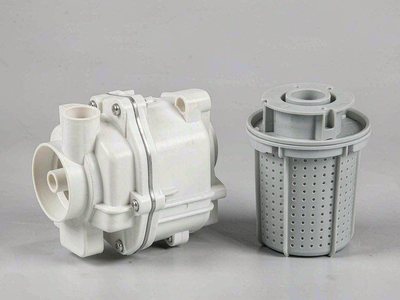 Ultrasonic Welded Pump Housing an
¥1.15/piece
Buyers in automotive and industrial programmes do not buy a part, they buy a documented process that produces the part. The part price is only half the quote; the other half is the evidence that the process will keep producing it. A moulding supplier without a documentation package is not quoting on the same terms as one with it.
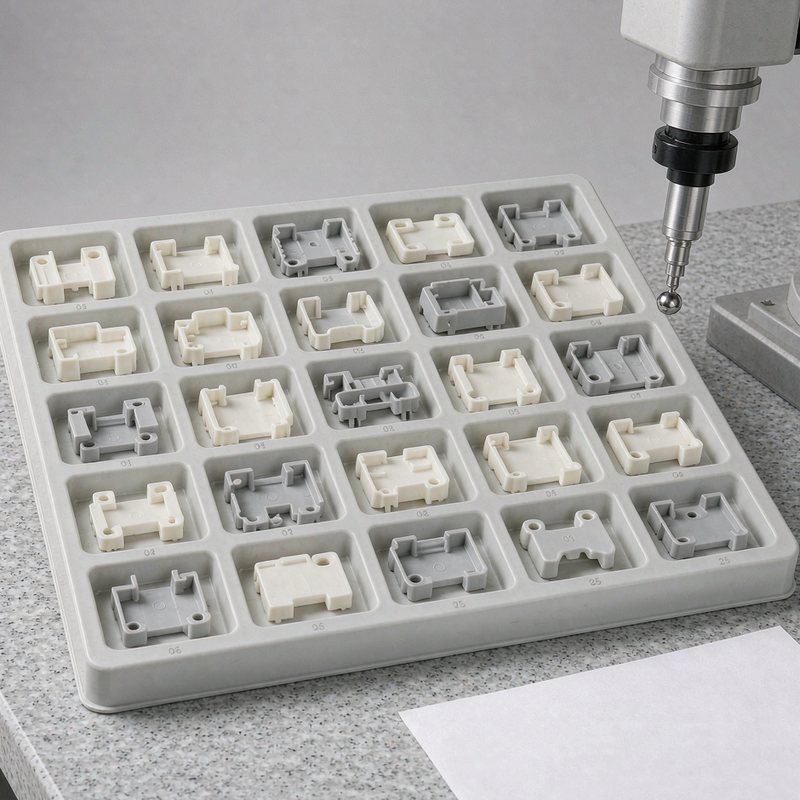
We mould custom PP and ABS components with PPAP Level 3 documentation for automotive, appliance and industrial programmes, with capability studies and material certification as part of the delivery.
An initial process study runs on a significant production run from the production tool: typically 300 consecutive pieces measured on the key characteristics. The study is not a formality, it is the check that the tool is capable rather than merely accurate. A tool can average the target dimension and still fail capability if the cavity-to-cavity spread is wide, which is why the study is run with pieces identified by cavity.
Averaging across cavities hides the most common moulding defect mode. A tool with one heavy cavity passes an average study and fails the customer's annual layout inspection six months later. Every capability study, every first article and every periodic re-validation is run with cavity identification, and the control plan states the sampling by cavity rather than by time.
| Materials | PP, ABS, PC/ABS, PA6 and PA66, glass-filled option |
|---|---|
| Documentation | PPAP Level 3, including MSA and initial studies |
| Capability | Cpk at or above 1.33 on key characteristics |
| Traceability | Lot recorded to resin lot, press and cavity |
| Re-validation | Annual layout per control plan |
| Change control | No material, tool or process change without notification |
| MOQ | 10,000 pieces per part number |
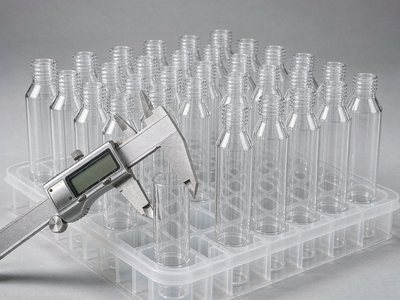
Most failed PPAP submissions fail on the measurement system rather than on the part. A calliper used to judge a 0.05 mm tolerance is not a measurement system, it is a guess with a display. Gauge R&R studies are run on the actual gauges used on the floor, and where the existing gauge cannot resolve the tolerance, the programme is quoted with the gauge rather than with a waiver.
The control plan commits the supplier to notify before any change to material source, tool, process parameter outside the stated window, or packing. This is the clause that protects the buyer's own approvals downstream, and it is also the clause that makes a moulder honest: a resin change that shifts shrinkage 0.2 percent invalidates a capability study, and the notification requirement means it surfaces in the control plan rather than in a field failure.
PPAP is not a one-time submission. The control plan requires an annual layout: full dimensional inspection of a production piece against the drawing, reported with the cavity identification. Where the tool shows drift on a specific characteristic, the layout frequency is increased and, if needed, a tool refurbishment is scheduled into the programme rather than reacted to after a customer complaint.
Documented programmes run hot-runner tools where the part geometry allows, because cold-runner regrind introduces a variable that the material certification cannot cover. Where a cold runner is unavoidable, the regrind ratio is stated in the control plan and capped, because regrind moves IV and impact performance in ways a certificate on virgin resin does not describe.
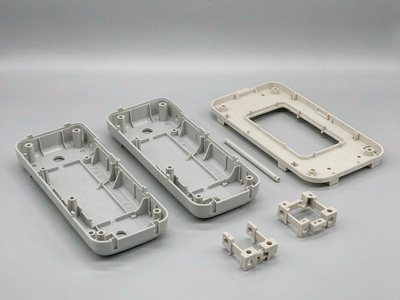
Our unassembled moulded components programme covers the bulk-parts angle, and the unassembled molded parts category lists the full range.
Tel:
Mobile:
Email:
Address: Suzhou Industrial Park, Jiangsu, China
WeChat Support
Mobile Store
