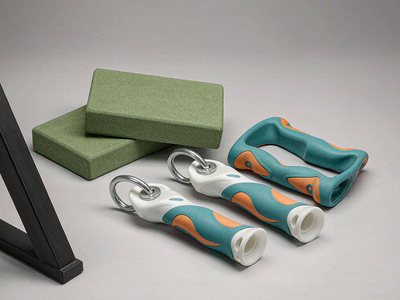
 Two-Shot Resistance Handle and Fi
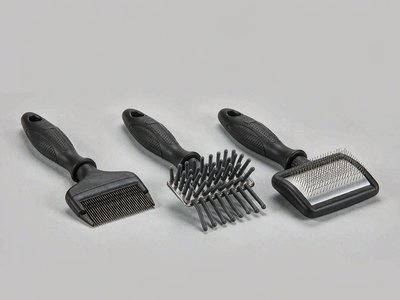 Pet Grooming Comb and Deshedding
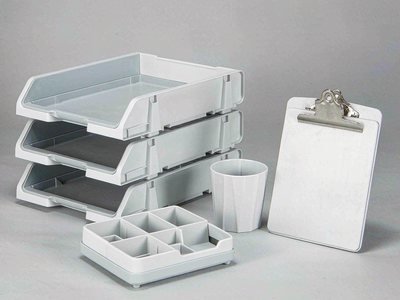 Plastic Desk Organizer and Docume
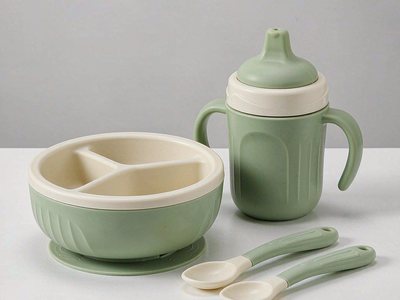 Food Grade PP Baby Feeding Bowl a
 Injection Molded Plastic Planter
Product Details
Welcome to Shenzhen Everyday Plastics Co., Ltd. official website!
- Scan for Mobile Store

Thin-wall molding, living-hinge design, two-shot handles, retail packing



Price¥0.65
MOQ3000 pieceStock:0 piece
 Company Card
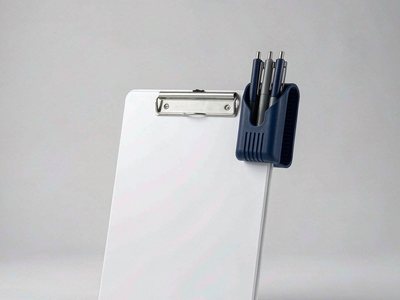
A clipboard is a commodity part with a non-commodity failure mode: the clip. Clips that lose tension in the first month, or that tear out of the board when the user pulls a form from under them, turn a stationery line into a returns line. The board itself is straightforward moulding; the clip interface is the product.
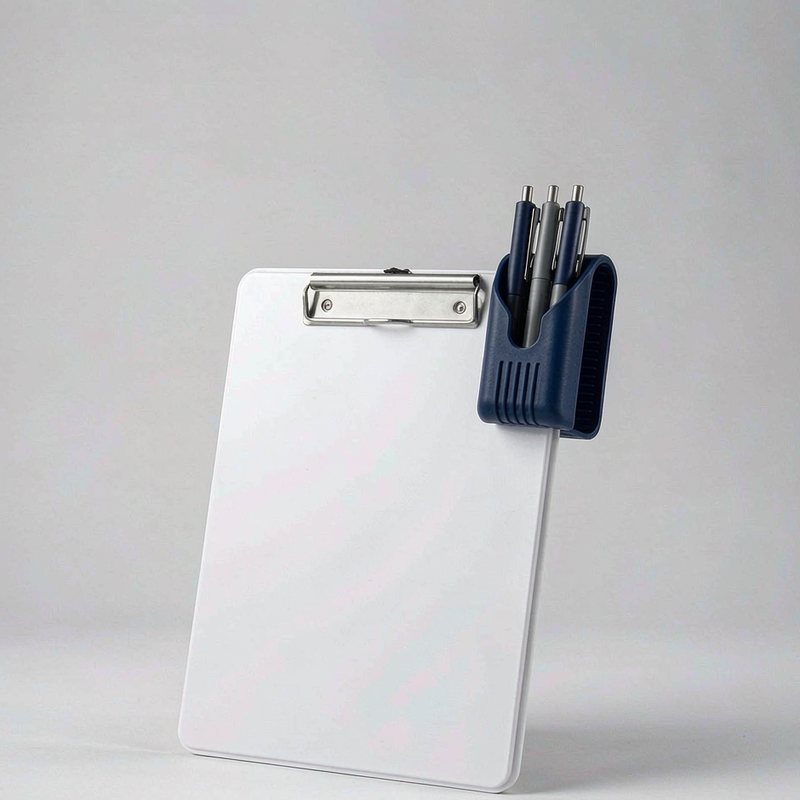
We mould clipboards and matching pen holders for stationery brands, promotional buyers and office supply programmes.
The steel clip is placed in the tool and the PP is shot around its legs, which puts three requirements on the mould: the insert must be held without flashing over the bearing face, the shot has to fill around the legs without short-shot at the root, and the part has to cool without pulling the legs out of square. We pull-test every first article to the quoted retention force and report the break mode, because a clean pull-out is a tool problem and a leg fracture is a material or design problem.
PP is the default: cheap, flexible enough to flex with the user, and it takes a moulded-in hook for hanging. ABS is stiffer and holds a flat writing surface better, at a higher price and with more brittleness at low temperature. For promotional programmes that will sit in a hot car boot, PP with a textured surface is the safer quote.
| Board | A4 and letter, 1.5 to 1.8 mm wall |
|---|---|
| Clip | Steel, insert moulded, low-profile |
| Pen holder | Clip-on or moulded into the board |
| Material | PP body, ABS option |
| Decoration | IML, pad print or printed sleeve |
| Packing | Header card or bulk polybag |
| MOQ | 3,000 pieces per colourway |
The pen holder is a small part with a large return rate if it is wrong. A holder that grips by friction alone loses the pen when the board is carried; a holder with a closed loop drops the pen on removal. The usual answer is an open C-profile with a rib that provides retention in one direction and release in the other, moulded as a separate part that clips to the board edge rather than as a second shot.
In-mould labelling gives the most durable branding on a board that will be written on for months, and it also stiffens the board slightly, which some programmes want and others do not. Pad printing is the promotional default because the set-up cost is low and the artwork changes per event. Printed sleeves are quoted where the programme needs full-colour branding without a label tool.
The clip insert is loaded by hand or by a simple pick-and-place, and that loading step is the main labour content on the board, which is why the MOQ is 3,000 rather than 1,000. Cycle time runs 25 to 35 seconds, and the part price is driven by the insert handling rather than by the resin. Promotional programmes with a fixed event date should allow the full 20-day lead time plus tooling, because the clip insert tool cannot be shortcut: a clip placed off-square in the tool produces a board that fails the retention test in the first article, not in the field.
Our desk organiser programme covers the wider desk family, and the stationery and office category lists the full range.
Tel:
Mobile:
Email:
Address: Bao'an District, Shenzhen, Guangdong, China
WeChat Support
Mobile Store
