Product Details
Welcome to Suzhou SemiParts Precision Plastics Co., Ltd. official website!
- Scan for Mobile Store

Engineering resin molding, insert molding, sub-assembly and kitting



Price¥0.04
MOQ50000 pieceStock:0 piece
 Company Card
PET Preform Family with Plus Minu
¥0.04/piece
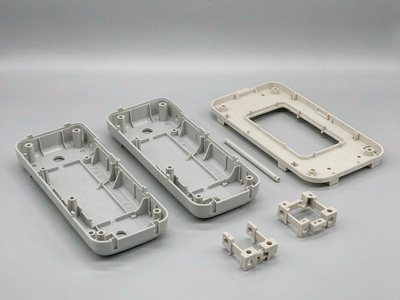 Unassembled Injection Moulded Com
¥0.18/piece
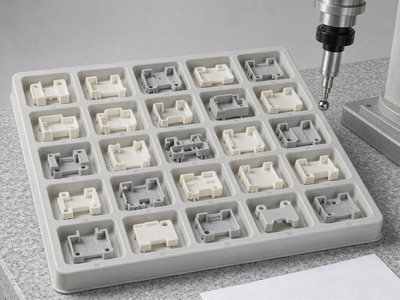 Custom PP and ABS Molded Componen
¥0.28/piece
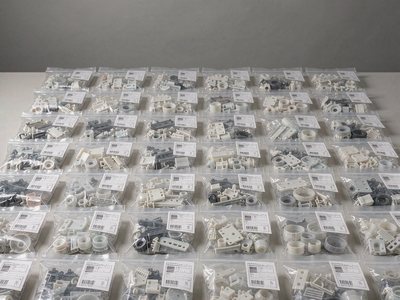 Bagged and Sorted Molded Parts Ki
¥0.02/piece
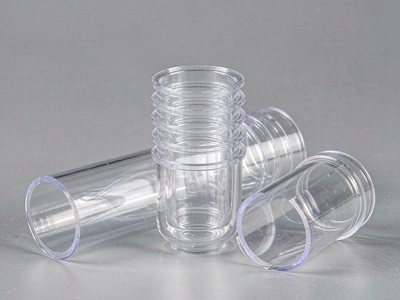 PET Preform 24/410 Neck Injection
¥0.03/piece
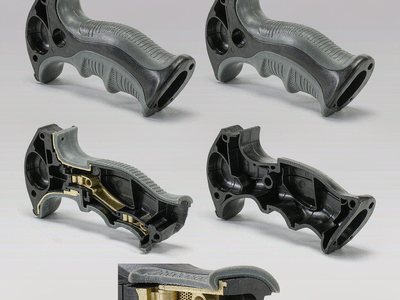 Overmoulded Grip and Handle Sub-A
¥0.85/piece
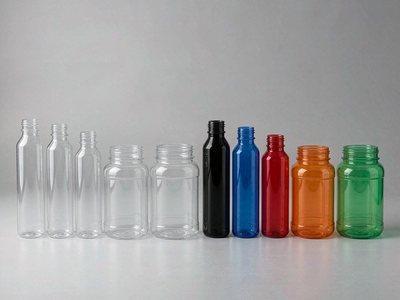 Colored PET Preform and Wide Mout
¥0.04/piece
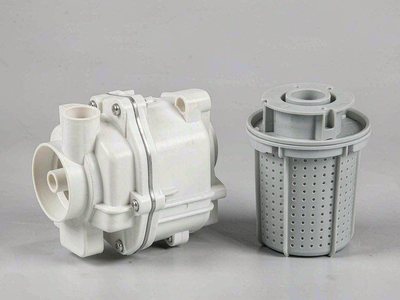 Ultrasonic Welded Pump Housing an
¥1.15/piece
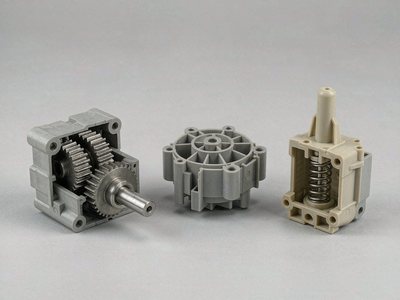 Moulded Plastic Sub-Assemblies Ge
¥1.15/piece
Two preform programmes can quote the same gram weight and deliver different bottles. The gram weight on the drawing is a target; the tolerance around it is what decides whether the blow moulder runs a consistent fill or trims every bottle. A preform that varies 2 g within a lot produces bottles that fail either fill height or top load.
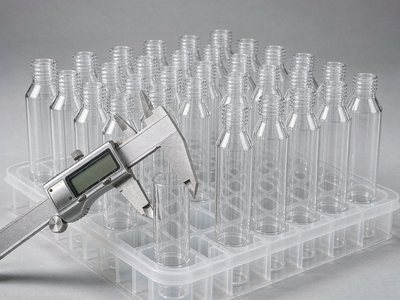
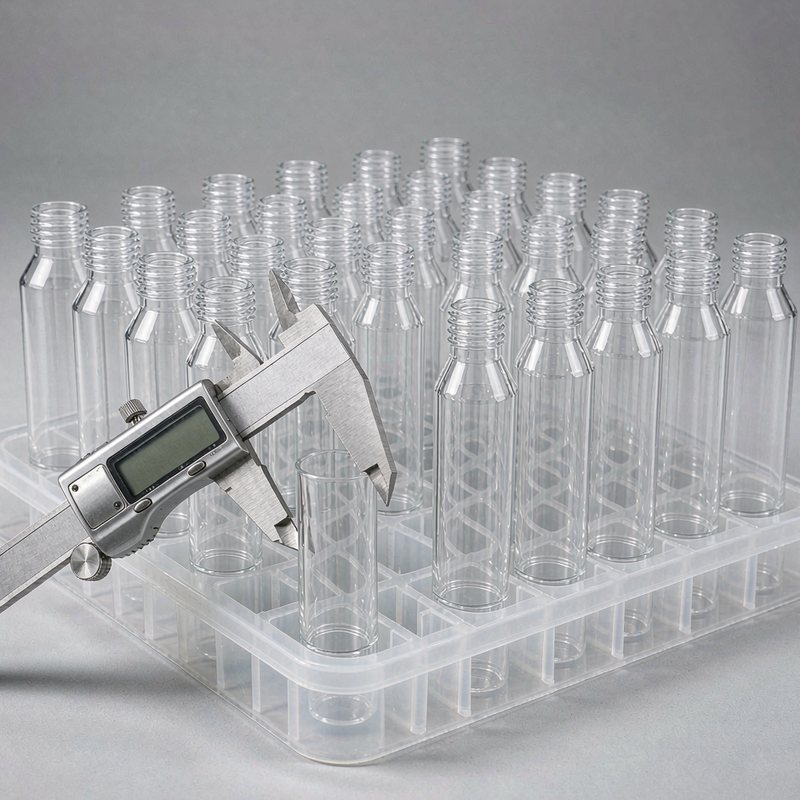
We mould PET preforms across the standard neck finishes with a stated plus/minus 0.2 g weight tolerance, cavity-balanced tools and per-lot material data.
A stretch blow moulder is set up for a preform weight. Preforms at the heavy end overstretch and produce thin sidewalls; at the light end they underfill and the bottle fails its volume or its drop test. The moulder can compensate a little, but the compensation is a machine setting that has to be re-tuned when the lot changes. A tight tolerance keeps the blow process in one setting window for the whole run.
The neck finish decides the closure, and the closure decides the programme. The common finishes are 24/410 for beverage and sauce, 28mm PCO for water and CSD, and 1881 for wider-mouth food containers. Each finish is a separate tool family because the neck insert is a dedicated component; the body can share a cavity design across finishes within a family, which is why programmes that need two finishes quote one body tool with a swappable neck insert rather than two tools.
| Neck finishes | 24/410, 28mm PCO, 1881, 3025 |
|---|---|
| Weight tolerance | plus/minus 0.2 g, cavity-verified |
| IV range | 0.80 to 0.84 dl/g, reported per lot |
| Acetaldehyde | Declared per lot for water programmes |
| Colour | Natural, or colour masterbatched |
| Packing | Bagged in tube or lined carton |
| MOQ | 50,000 pieces per finish and weight |
Intrinsic viscosity is the number that decides blow behaviour, and it moves with the resin lot and with drying history. Every preform lot ships with the IV result, because a blow moulder running a new lot at the same setting will see a different stretch if the IV has moved. For water and sensitive beverage programmes the lot also carries the acetaldehyde result, and the CCR colour value where the bottle is sold clear. Supplying the data with the lot is what lets the buyer hold their own process steady.
The preform body is designed for the bottle, not for itself: the axial wall profile is stepped so that after stretch the sidewall is uniform and the base carries the thickness it needs for drop performance. This is simulated rather than guessed on established programmes, and the simulation is checked against blown first articles from the production tool. A preform that blows well on a prototype tool can fail on a production tool if the cooling circuits were laid out for prototype cycle times.
PET absorbs moisture, and a preform that has picked up humidity blows hazy and brittle. Preforms are packed in lined cartons or bagged tubes, and the buyer's blowing line needs the drying step regardless. What the moulder controls is the moisture at packing: lots are cooled fully before bagging, because a warm preform bagged into a sealed liner condensates on itself. The packing note states the moisture at packing so the blowing line can set its dryer.
Our 24/410 neck preform programme covers the single-finish angle, and the preforms and blanks category lists the full range.
Tel:
Mobile:
Email:
Address: Suzhou Industrial Park, Jiangsu, China
WeChat Support
Mobile Store
