











Automotive plastic parts carry a harsher service life than almost any other moulded component. A clip inside a door trim survives tens of thousands of open-close cycles; a connector housing sits in an engine bay that swings from sub-zero winter mornings to full summer heat; a fluid reservoir holds coolant for a decade without weeping. An automotive plastic parts manufacturer is therefore judged on a different scorecard than a general moulder: dimensional stability after thermal ageing, material traceability, and a documented process that survives a customer audit. This page explains what that scorecard contains and how to evaluate a supplier before the first tool trial.
What Automotive Plastic Parts Demand from a Manufacturer
Three requirements separate automotive work from commercial moulding. First, materials are specified rather than chosen: the grade, lot and supplier are fixed by the customer's engineering release, and any substitution is a formal re-approval. Second, the process must be capable, which means demonstrated capability on critical dimensions rather than a single good part off the trial. Third, every shipment travels with documentation that ties the parts back to the press, the cavity and the resin lot that produced them.
Materials by Application Zone
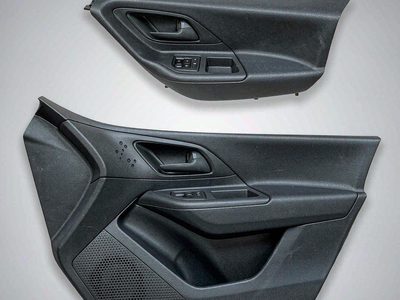
- Interior and trim — PP and TPO grades selected for low fogging and low odour, textured to match the design master, and stabilised against UV through the glazing.
- Under-hood and power train — PA6 and PA66, usually glass-filled, plus PBT for electrical parts; heat ageing and coolant resistance drive selection.
- Electrical connectors — PBT and PA with stabiliser packages that hold insulation resistance after humidity exposure.
- Fluid handling — PA12 and PPS for fuel and coolant circuits, specified for permeation and pressure cycling.
- Exterior body — PC/ABS and PPO blends where impact and paintability matter.
Quality System and Documentation
The baseline expectation is a quality management system certified to IATF 16949, the automotive sector's standard. In practice the certificate matters less than the habits behind it: layered process audits, mistake-proofing on critical features, and change control that blocks unapproved substitutions. The standard deliverable package for a new part is PPAP at Level 3, covering the process flow, FMEA, control plan, dimensional results, material certificates and a part submission warrant.
Evaluating a Supplier Before You Commit
- Ask for the certificate scope, not just the certificate — many moulders hold IATF 16949 for a narrow range only.
- Request the control plan for a comparable part and check that critical characteristics match the customer drawing.
- Confirm press capacity against part size and tonnage, and whether the tool can run in a dedicated slot.
- Review the traceability chain from resin lot to cavity to shipment, and record retention.
- Ask how engineering changes are handled and who signs them off.
For the certification process itself, our guide to IATF 16949 for automotive plastic parts breaks down cost, timeline and what buyers should verify. Design decisions that make a part mouldable are covered in the plastic part design guidelines. Buyers comparing producers can browse the automotive and application parts listings and cross-check factory credentials in the supplier directory.
