





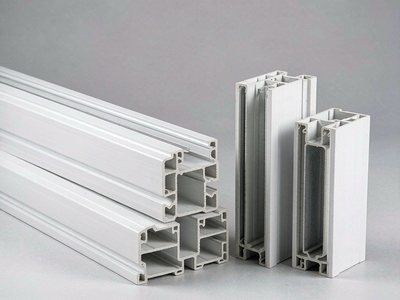

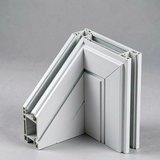
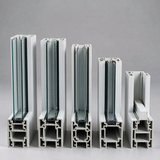
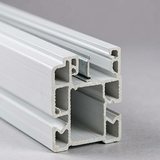

Working with a PVC profile manufacturer means treating window and door systems as an extrusion specification problem before they become a price problem. Rigid uPVC profiles are co-extruded in multi-chamber designs, gasket channels and steel-reinforcement cavities are formed in the same pass through the die, and the difference between a profile that holds a sash square for twenty years and one that bows in five is decided in the compound, the die design and the cooling calibration - not in the quotation. This page covers the profile families Chinese manufacturers produce, the specification points that decide long-term performance, and the commercial terms that apply to export orders.
What a PVC Profile Manufacturer Supplies
A complete window or door system is a set of profiles that must be extruded, welded and reinforced as one design:
- Window profile systems - multi-chamber frames, sash profiles and glazing-bead sections, plus cill and jamb extensions that complete the installation.
- Door profile sets - door leaves with steel cores, frame profiles and the threshold and transom sections larger projects require.
- Co-extruded and capped profiles - a coloured PMMA or ASA cap layer over a uPVC body, so the finish resists weathering without pigmenting the structural material.
- Custom profiles to drawing - cable trunking, edge banding, curtain-wall sections and blind components extruded from customer cross-sections.
Specification Points That Decide Profile Life
Three areas separate capable extruders from catalogue resellers. The first is formulation: lead-free calcium-zinc or tin-stabilised compounds with the impact-modifier package matched to the climate the window will serve, because tropical and high-UV markets need higher titanium dioxide and modifier loading than temperate ones. The second is the cross-section drawing with wall callouts - chamber count and wall thickness decide thermal performance and the screw-holding strength that keeps hardware tight, and a photograph of a finished window tells you neither. The third is steel reinforcement: ask for the gauge, the coating type and whether the insert is roll-formed in-house, since thin or uncoated steel corrodes inside a closed cavity and the failure stays invisible until the sash drops.
Documentation, Colours and Export Terms
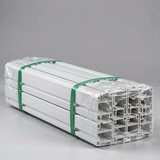
Serious manufacturers can supply batch impact-test data for the compound, the pigment and titanium dioxide content, and fusion-welding guidance, because most fabricators join profiles by heat welding and a compound mismatch shows up first as weak corners. Colours are quoted against a RAL reference with a minimum per colour, MOQs commonly start around 1,000 m per profile or a mixed container of sections, and lead times run 20-30 days per production run. For export orders, confirm the timber packing meets ISPM-15 and fix the pallet specification in the contract. Before fixing the system, review the EU and US plastics compliance map for the rules your destination market applies, read how to import plastic products from China for the order sequence, and use the supplier directory together with the plastic products category to shortlist extruders with the documentation your market expects.