



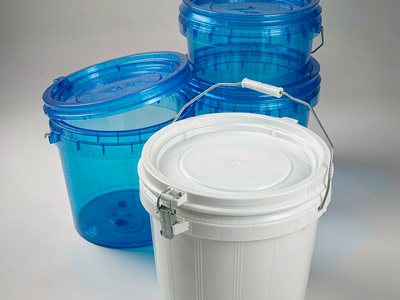

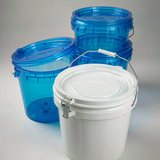
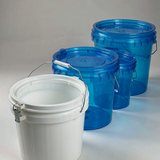
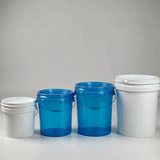
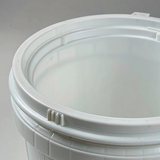
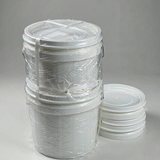

A plastic bucket manufacturer produces two very different products under one name: the thin-wall retail pail sold in hardware shops, and the heavy-duty industrial container that carries chemicals, coatings and food ingredients. The two are separated by wall thickness, handle construction, lid tolerance and, in many markets, by certification. Buying either without specifying those four points is how importers end up with a container that leaks at the seam or a lid that will not reseat after the first opening.
PP or HDPE: The First Decision
Both polymers dominate bucket production, and the choice follows the contents rather than the price.
- PP — stiffer, higher heat resistance, clearer surface. Preferred for food contact, hot-fill applications and pails that must hold shape when stacked full.
- HDPE — tougher at low temperature, better chemical resistance, softer gloss. Preferred for detergents, agricultural chemicals and outdoor storage.
A common compromise is a PP body with an HDPE lid, or a coextruded structure where the inner layer handles chemical contact and the outer layer carries the colour.
Structure Points That Decide Whether It Works
- Stacking load — a bucket that will be stacked four high needs a reinforced rim and a base rib pattern, not just a thicker wall.
- Handle attachment — integrated moulded ears with a steel or PP bail. Wire bails need a defined ear thickness or they cut through under load.
- Lid and seal — snap lids, screw lids and tear-tab lids behave differently after repeated opening. State the number of open-close cycles expected.
- Draft and ejection — deep buckets need adequate draft; a supplier who reduces wall thickness to save cycle time usually pays for it in ovality.
Certification and Marking
Food-contact buckets need a declaration of compliance for the destination market, and pails used for dangerous goods need UN marking with the appropriate packing group. Ask for the test report that matches the exact volume and closure combination being quoted — approval for a 10 L pail does not transfer to a 20 L version.
What to Put in the Enquiry
Volume in litres, intended contents, stacking height, lid type, colour, printing method and the destination market's food-contact or transport requirement. Suppliers who quote from those six lines produce comparable prices. Compare capacity across plastic products manufacturers, and if the same shipment includes crates or totes, review the logistics crate range so the container family is consistent. Verified suppliers will normally state which volumes share a mould family, which is where the real tooling savings sit.