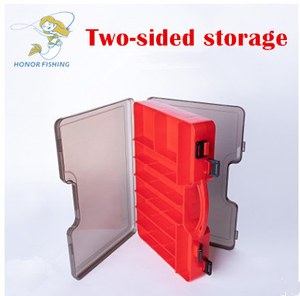






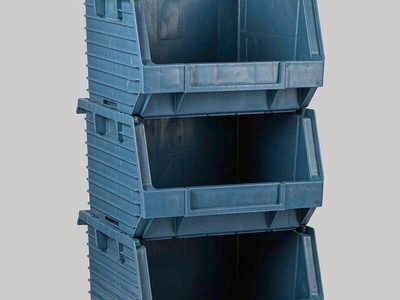

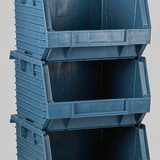
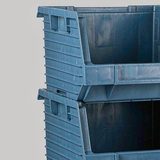
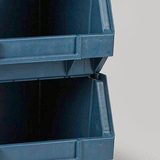


A plastic storage box manufacturer does two very different jobs with one machine. Houseware mouldings are sold on looks and price; warehouse bins are sold on load rating and stacking performance. This page focuses on the second category: PP and HDPE stackable bins that carry weight in distribution centres, workshops and retail back rooms. It covers how bin geometry, material grade and load ratings should be specified, and what separates a genuine storage box manufacturer from a general houseware moulder. For the wider product range, browse the plastic products catalogue, and for material questions this guide to industrial polypropylene specifications explains grade selection in detail.
What Separates Warehouse Bins from Houseware Boxes
The visible difference is the wall section. A storage bin built for stacking carries thickened ribs at the load-bearing corners and a lid or lip that transfers weight to the box below rather than to the contents. Houseware boxes optimise for thin, even walls that look clean on a shelf. Ask the supplier which standard the bin is designed against and how stacking height is calculated - a bin rated for five high when full is an engineered part, not a moulded tray with handles.
Materials: PP versus HDPE for Storage Boxes
PP is stiff, which keeps tall bins from bulging under load, and it survives the drop tests that distribution work imposes. HDPE is tougher at low temperature, so bins that live in unheated warehouses or cold-chain back rooms stay impact-resistant in winter. Food-grade and UV-stabilised versions of both exist; UV stabilisation matters for bins used in outdoor or greenhouse storage, where unstabilised PP embrittles within a season.
Load Ratings and Stacking Tests
- Static stacked load - the weight the bottom box carries in a stack at rest, quoted in kilograms.
- Dynamic load - handling load during transport, usually quoted well below static figures.
- Drop test - filled drop from a stated height at low temperature, repeated without cracking.
- Lid retention - whether lids stay seated when the stack is moved on a trolley.
MOQ, Lead Time and Customisation
Standard sizes run from existing tools, so minimum orders start around 500 pieces per size and lead times sit near three weeks. Custom sizes, dividers and logo moulding need new tooling, which pushes lead times past a month and raises the minimum. Request a sample before committing: check wall thickness at the corners with a gauge rather than by feel, and stack the samples to the rated height with ballast weight. The company directory groups storage and houseware moulders by region, which helps when comparing tooling capability and export experience side by side.