The bin is a vehicle interface, not a box
A 240 litre wheelie bin spends its life being tipped, lifted, dropped and dragged. The part that fails first is rarely the body — it is the point where the body meets the lifting equipment, or the axle where the wheel meets the kerb.
That is why wheelie bins are bought against a standard rather than a description. In Europe that standard is EN 840, and a supplier who cannot say which part of it their container is tested to is telling you they have not tested it at all.
What each part of EN 840 actually covers
Buyers routinely ask for "EN 840 certified" as a single item. It is a six-part standard, and the parts divide by container type and by discipline:
| Part | Scope | What it means when you buy |
|---|---|---|
| EN 840-1 | Two-wheel containers, roughly 80–390 L | Covers 120 L, 240 L and 360 L bodies; fixes dimensions so the bin fits standard lifting gear |
| EN 840-2 | Four-wheel containers, 500–1300 L, flat lid | The 660 L and 1100 L class used at transfer stations and commercial sites |
| EN 840-3 | Four-wheel containers, 500–1300 L, dome lid | Same chassis as -2, domed cover for wet waste |
| EN 840-4 | Four-wheel, wide-body flat lid | Wide footprint for low-density waste such as cardboard |
| EN 840-5 | Performance requirements and test methods | The part your test report should cite — drop, lift, roll, UV |
| EN 840-6 | Safety and health requirements | Edge radii, lid retention, pinch points |
A report that cites only EN 840-5 without stating the container class in -1 through -4 is incomplete: the pass criteria differ by class, so the number means nothing on its own.
Dimensions are the compatibility layer
Container geometry is what lets a bin be emptied by any standard rear-loader or comb-lifter. Two dimensions do most of the work:
- Comb / trunnion position. Get this 10 mm wrong and the bin either will not seat on the lifter or seats and drops. Ask for the drawing, not the catalogue photo.
- Overall height at the lifting pocket. A body that has been "improved" with a taller lid can foul the lifting arc on older vehicles.
Both are fixed by the standard, which is exactly why specifying EN 840-1 rather than "240 litre bin" protects you. If your fleet is mixed, the standard is the only thing keeping a new supplier's container compatible with a 15-year-old truck body.
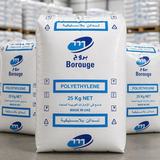
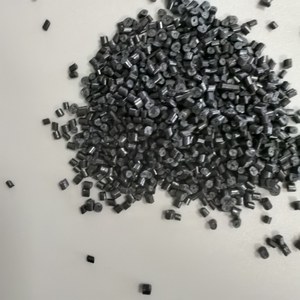
HDPE: melt flow decides whether the tool fills
Wheelie bins are injection moulded in HDPE, and the grade is chosen for flow length rather than for stiffness. A 1100 L body has a flow path over a metre long from the gate; the melt has to reach the far corner before it freezes.
Practical grade window for large containers:
- MFI 5–8 g/10 min at 190 °C/2.16 kg for 660 L and 1100 L bodies. Higher flow fills more easily but drops impact strength and environmental stress crack resistance.
- MFI 8–12 for 120–240 L bodies, where the flow path is shorter and cycle time matters more.
- Copolymer rather than homopolymer. The comonomer gives low-temperature impact. A homopolymer bin that survives a 20 °C drop test can shatter at −10 °C.
Ask for the resin data sheet and the lot traceability, not just "virgin HDPE". Recycled content is workable — many municipal tenders now ask for it — but rHDPE at 30% typically costs 20–30% of notched impact strength, so the UV and drop tests have to be re-run on the actual blend, not on the virgin reference.
UV stabilisation: the difference between 5 years and 15
A bin in direct sun in southern Europe or the Gulf sees an ultraviolet dose that unstabilised HDPE will not survive. Two packages are common:
- Carbon black at 2.0–2.5%, well dispersed. Cheap, effective, and the reason most outdoor bins are black or dark green. Poor dispersion creates unshielded pockets that chalk and crack first.
- Hindered amine light stabiliser (HALS) at 0.3–0.5%, used alone for light colours or combined with a reduced carbon black load.
Testing is normally quoted as an accelerated weathering hours figure (ISO 4892-2 xenon-arc) plus a retained-impact criterion. A supplier quoting "UV stabilized" without saying which package and which hours is quoting a word, not a specification. Write the requirement into the purchase order as: package, loading, test method, hours, and minimum retained Charpy impact.
Wall sections and ribs: where the mass goes
Bin bodies are not uniform. The wall is thinnest where it is cosmetic and thickest where it takes load:
| Zone | Typical section | Reason |
|---|---|---|
| Side wall | 4.0–5.0 mm | Impact from handling, resistance to bulging under compaction |
| Base | 6.0–8.0 mm with wear pads | Dragging over kerbs and concrete |
| Rim / top edge | 5.0–6.0 mm | The rim is the lifting interface and the stiffest ring |
| Ribs | 0.6× adjacent wall | Stiffness without sink marks on the visible face |
A bin that bulges when full has too little lateral ribbing, not too little wall. Adding wall thickness to cure bulge raises weight, cost and cooling time, and usually makes warpage worse.
Wheels, axles and the load case nobody tests
The rated load is the number buyers compare, and it is also the number most often misread. Working figures for well-built containers:
- 240 L two-wheel: around 100 kg gross. The wheel and axle, not the body, set the limit.
- 660 L four-wheel: around 350–400 kg gross.
- 1100 L four-wheel: around 500–600 kg gross.
The axle is the weak point on two-wheel bins. A 20 mm solid steel axle in a moulded PP hub holds up; a 20 mm tube with a 1.5 mm wall does not survive repeated kerb drops. Specify axle material, diameter, wall thickness, and the bearing type — plain bushings are common and acceptable, sealed bearings are not standard and should be called out if wanted.
Wheel compounds split three ways: PP (cheapest, noisy, wears flat), PA6 (harder, better on rough ground, more expensive), and rubber-tyred PP for quiet residential collection. For any tender involving noise restrictions, the wheel is the component that decides compliance.
The test schedule to put in the contract
A wheelie bin specification earns its keep only if it is testable. Five checks cover the failure modes that matter, and all of them are type tests a moulding supplier should already have on file:
- Loaded drop — full container dropped from the height given in EN 840-5 for its class, on a hard surface, lid closed. Pass: no crack, lid still latched.
- Lift and tip cycle — the container lifted and inverted on a compatible lifter, repeated, with the load held. Pass: no permanent deformation at the trunnion, no lid release.
- Rolling test — loaded container towed or pushed over a defined obstacle course for a set distance. Pass: wheels intact, axle straight.
- UV ageing — xenon-arc exposure to the agreed hours, then impact test. Pass: retained impact above the stated floor.
- Cold impact — drop at −10 °C or −20 °C if the market requires it. This is the test that separates copolymer from homopolymer.
Ask for the report with the container class and part numbers visible. A report covering a 120 L body says nothing about a 1100 L body from the same factory.
Loading, nesting and what it does to your freight
Bins nest, which is why freight per unit is low but not zero. A 240 L body nests roughly one into another with a 60–80 mm increment; 1100 L bodies are usually shipped two or three high on pallets. Two consequences for the purchase order:
- Nesting increment is a moulding decision. A deeper taper nests tighter and ships cheaper, but reduces usable volume and weakens the wall. Do not let a supplier change taper after approval.
- Lids ship separately or inverted. Confirm which, because a lid shipped loose is a lid that arrives scratched, and scratches in a UV-stabilised surface are where chalking starts.
What to put on the drawing
The specification that works is one page: container class and capacity, the EN 840 part cited, resin type and MFI, UV package and test hours, wall and base sections, wheel and axle specification, lifting interface dimensions, colour and marking, and the five tests above with pass criteria. Anything not on that page is a conversation, and conversations do not survive a change of project engineer.
Bins are bought in thousands and used for a decade. The cost of getting the axle and the lifting pocket right is a drawing review; the cost of getting them wrong is a container fleet that fails in the second winter.
Related product categories
The materials and part types discussed above are grouped in our sourcing directory: