




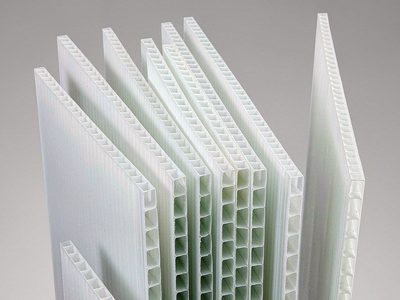


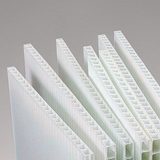
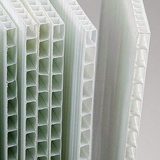
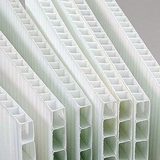

Corrugated plastic sheet — twin-wall polypropylene fluted board with a flat liner on each face — is the default material when a job needs light weight, water resistance and enough stiffness to hold a span. A corrugated plastic sheet supplier is judged on three things: flute retention through the sheet, UV stability that lasts more than one season, and how cleanly the board creases without cracking the liner. This page covers the grades, the extrusion process behind them, and the questions that separate a converter who stocks board from one who actually makes it.
Structure and How Corrugated Plastic Sheet Is Made
The board is extruded in one pass: two flat liners form on either side of a fluted core, and the laminate knits together before it passes through the nip rollers. Polypropylene dominates because it folds on a crease without cracking, though HDPE and recycled-content PP appear in short-life grades. After extrusion the sheet is cut to size, die-cut or folded on a rule press, and — where the job needs it — corona-treated so ink and adhesive actually bond to the PP surface. Untreated PP is the single most common cause of print that rubs off, so treatment level is worth confirming in writing.
Grades by Service Life
- Standard PP — indoor and short-cycle outdoor use: election signage, trade-show graphics, temporary packaging.
- UV-stabilised PP — outdoor signage and site barriers that must hold colour and impact for a season or two.
- Anti-static (pink) PP — electronics packaging and cleanroom use where static discharge is a concern.
- Flame-retardant PP — display and exhibition stands in venues with fire-code requirements.
- Recycled-content PP — cost-driven applications with a sustainability angle, typically built on mixed flake feedstock.
Applications Buyers Ask About
Three use families account for most volume. Packaging: returnable containers, layer pads and box dividers that replace corrugated fibre wherever moisture is present. Signage: real-estate signs, event boards and poster substrates that have to survive rain. Protection: temporary floor and stair protection on construction sites, and greenhouse panels in agriculture. Each family prices differently, and a supplier strong in signage stock is not automatically the right source for a food-adjacent packaging grade.
What to Confirm Before Ordering
- Board caliper and flute retention, measured across the sheet rather than at the trimmed edge.
- UV warranty terms in writing, with the test method named rather than a vague outdoor-life claim.
- Surface treatment for printing: corona or flame treatment level, plus a print adhesion test on the shipped sheet.
- Food-contact compliance, if the packaging will touch food at any point in the chain.
- Recycled content percentage, where the specification calls for it, and how the figure is verified.
Material grades and compound suppliers are listed under plastic raw materials, with related converted products under plastic products. The guide to plastic material specifications covers how to read a data sheet, and the supplier directory supports factory-level screening.