Why LDPE specs decide your film performance
Low-density polyethylene (LDPE) is the workhorse of flexible packaging — and the specification sheet buyers receive is often thinner than the decision requires. Two numbers on that sheet do most of the work: density and melt flow index (MFI). Together with certification status, they determine whether a grade will run on your line and pass your end-market requirements.
The commercial backdrop is strong. Global trade in plastic raw materials reached USD 381.5 billion in 2026, up 15.04% year-over-year, and LDPE ranks as the fourth most-traded general plastic with buyer growth of 22.1% compared to the previous year. On the demand side, LDPE buyer demand increased 40% year-over-year, with India, the US and Pakistan as top markets. The global LDPE market itself is projected to grow from 28.21 million tons in 2026 to 33.65 million tons by 2031 (3.59% CAGR), with value estimates from USD 55.86 billion (2026) to USD 84.00 billion (2033) at 6.0% CAGR. Asia-Pacific accounts for 47.36% of global consumption, films represent 56.71% of applications, and the packaging industry consumes 57.93% of total supply — which is why most LDPE RFQs are, in the end, film RFQs.
Density: the 0.910–0.940 window that matters
According to the source, LDPE density ranges from 0.902 to 0.980 g/cm³ across material databases, but commercial grades typically fall between 0.910–0.940 g/cm³. The lower band, 0.910–0.925 g/cm³, offers higher flexibility and elongation, better clarity for transparent films, and superior impact resistance at low temperature. Higher-density grades trade some of that flexibility for stiffness and barrier improvement.
For buyers, density is not an abstract material constant — it is the difference between a film that seals cleanly at line speed and one that wrinkles, and between a stretch-wrap that clings and one that flags. Quote density to three decimal places with a tolerance, and require the supplier to state the measurement standard.
MFI: the processing window
Melt flow index measures how easily the polymer flows when melted, and the source maps it to three practical tiers:
| MFI (g/10 min) | Molecular weight | Behavior | Typical use |
|---|---|---|---|
| 0.1–2 | Higher | Better mechanical properties, harder processing | Thin high-strength films, heavy-duty applications |
| 2–7 | Balanced | Balanced flow and properties — most common | Film extrusion, general applications |
| 7–25+ | Lower | Easier processing, faster cycles, reduced mechanical strength | Thin high-output films, coatings |
The buyer-side trap is symmetrical: a high-MFI grade will run faster but may under-deliver on strength; a low-MFI grade may be stronger but demand more energy and narrower processing windows. Specify the MFI range your process needs, not the highest number the supplier offers — and treat any "we can do any MFI" claim without test data as a red flag.
Grade selection by application
The source provides a direct application-to-specification mapping that buyers can lift straight into an RFQ:
| Application | Density (g/cm³) | MFI (g/10 min) | Key properties | Common certifications |
|---|---|---|---|---|
| Food packaging films | 0.915–0.925 | 1.0–4.0 | High clarity, seal strength, low odor | FDA, EU 10/2011, BRC |
| Agricultural mulch films | 0.918–0.930 | 0.5–2.0 | UV resistance, puncture resistance | ISO 9001 |
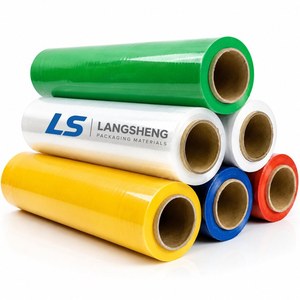
| Stretch wrap films | 0.910–0.920 | 1.0–3.0 | High elongation, cling, tear resistance | ISO 9001 |
| Wire & cable insulation | 0.920–0.935 | 0.3–1.5 | Dielectric strength, thermal stability | UL, RoHS, REACH |
| Medical device components | 0.915–0.925 | 2.0–7.0 | Biocompatibility, sterilization resistance | ISO 10993, USP Class VI |
| Consumer goods (toys, containers) | 0.920–0.940 | 3.0–10.0 | Impact resistance, colorability, safety | EN71, CPSIA, FDA |
| Heavy-duty sacks | 0.925–0.940 | 0.5–2.0 | High tensile strength, puncture resistance | ISO 9001 |
Application-specific growth within LDPE is not uniform: wire & cable insulation is the fastest-growing segment at 4.14% CAGR, followed by medical & healthcare at 4.12% CAGR, with agricultural films showing steady demand from emerging economies. Buyers in regulated end-markets should note that the table's certification column is the floor, not the ceiling — food grade certification (FDA, EU 10/2011) is mandatory for food contact applications.
Where the growth is — and what it means for sourcing
Three demand signals stand out for 2026 sourcing decisions:
- Film remains the volume core. With films at 56.71% of applications and packaging consuming 57.93% of supply, clarity, seal strength and elongation specifications dominate most RFQs.
- Regulated segments grow faster. Wire & cable (4.14% CAGR) and medical (4.12% CAGR) outpace the overall 3.59% volume CAGR, pulling demand toward certified grades with documented biocompatibility or dielectric performance.
- Buyer growth is concentrated in India, the US and Pakistan — markets where price sensitivity and certification depth vary widely, making the supplier's documentation quality a genuine differentiator.
Buyer RFQ checklist
When quoting LDPE, include:
- Target density with tolerance (e.g., 0.918–0.923 g/cm³) and measurement standard.
- MFI range with test condition (temperature/load per ASTM D1238) and acceptance tolerance.
- Application and end product (film type, thickness, line speed) so the supplier can map to the grade table above.
- Required certifications for the end market (FDA, EU 10/2011, BRC, ISO 10993, USP Class VI, EN71, CPSIA as applicable), with certificate copies and issuing body.
- Recycled content percentage, if any — and the same density/MFI data for the recycled stream.
- Volume projections and packaging format (25 kg bags, octabin, bulk) for landed-cost comparison.
The bottom line
LDPE procurement is won or lost on two decimal-level numbers and one document set: density in the 0.910–0.940 window, MFI matched to your process tier, and certifications matched to your end market. With the market growing at 3.59% by volume, buyer demand up 40% year-over-year, and regulated segments outpacing the average, buyers who write specs precisely get comparable quotes; buyers who write "standard film grade" get incomparable ones.
This guide is for sourcing reference only and does not constitute regulatory or legal advice. Certification requirements vary by market and application — verify current requirements with the relevant authorities or your compliance counsel before production.
Sources: Alibaba.com Seller Blog — "LDPE Plastic Raw Material Specifications: A Complete B2B Buyer's Guide" (citing Mordor Intelligence volume data, Coherent Market Insights value data). All figures verified against the source article before publication.
Related product categories
The materials and part types discussed above are grouped in our sourcing directory: