Why PPS sits in its own procurement bracket
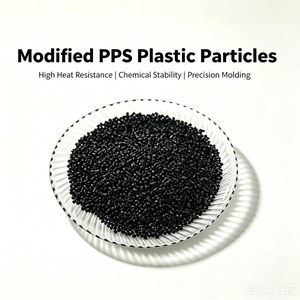
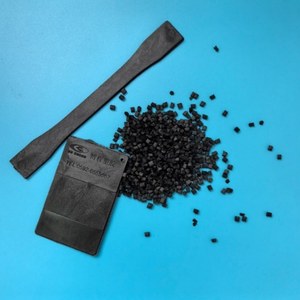
Polyphenylene sulfide (PPS) is a semi-crystalline high-performance thermoplastic specified where thermal stability and chemical resistance rule out standard engineering plastics. The headline numbers frame the bracket: PPS melts at 280°C, runs at 200-240°C continuous service, and tolerates 260°C short-term peaks (as cited). Two properties explain its pull for B2B buyers — inherent UL94 V-0 flammability without additives and 0.02% water absorption, which keeps dimensions and electrical performance stable through heat and humidity cycling (as cited).
The commercial case is equally specific. At $5-10 per pound, PPS costs roughly 1/5th to 1/10th of PEEK and 1/20th to 1/50th of polyimide for overlapping duty (as cited). For cost-sensitive high-temperature programs, that gap is usually the difference between a viable production part and a redesign.
The property table that drives material selection
Buyers should anchor evaluation on the verified comparison the source compiles for the three high-performance thermoplastics (as cited):
| Property | PPS | PEEK | Polyimide (PI) |
|---|---|---|---|
| Continuous use temperature | 220-240°C | 250°C | 260-300°C |
| Melting point | 280°C | 343°C | No melting (thermoset) |
| Glass transition (Tg) | 88°C | 143°C | 360-410°C |
| Short-term peak temperature | 260°C | 310°C | 480°C |
| Tensile strength | 86 MPa | 100 MPa | 105 MPa |
| Chemical resistance | Excellent (no solvents <200°C) | Very good | Good |
| Flame rating | UL94 V-0 (inherent) | UL94 V-0 (inherent) | UL94 V-0 (inherent) |
| Water absorption | 0.02% | 0.50% | 2.50% |
| Cost per lb | $5-10 | $50-100 | $100-500 |
| Processing difficulty | Moderate | High | Very high |
The standout row is chemical resistance: no known solvent attacks PPS below 200°C (as cited). That is why PPS owns pump impellers, valve bodies and filter frames in acid, base and solvent service — the same duty window covered in our corrosion resistant valves and fittings guide and HDPE chemical storage selection. Mechanical loads above the 86 MPa tensile ceiling, or continuous duty beyond 240°C, point to PEEK — see PEEK HT high-temperature grades and PEEK automotive ESD grades. Transparency requirements exclude PPS entirely; PSU/PPSU or PEI fill that gap (PEI Ultem 1000).
Where the demand is: market structure by application
The global PPS market was USD 2.75 billion in 2024 and is projected to reach USD 4.03 billion by 2030, a 6.8% CAGR — a USD 1.28 billion expansion (as cited). An alternative Mordor Intelligence forecast sizes the market at USD 1.22 billion in 2026 growing to USD 1.55 billion by 2031 at 4.97% CAGR; buyers should treat the two scopes as different definitions rather than a contradiction (as cited). Regionally, Asia-Pacific accounts for 67.26% of global PPS consumption, while North America is the fastest-growing market at a 5.16% CAGR through 2031 on automotive lightweighting and aerospace demand (as cited).
The 2026 application mix from Mordor Intelligence shows where component demand concentrates (as cited):
| Application sector | Market share | Key components |
|---|---|---|
| Automotive & transportation | 32.48% | EV battery parts, fuel systems, sensor housings |
| Electrical & electronics | 28.15% | Connectors, bobbins, circuit breaker parts |
| Industrial machinery | 18.92% | Pump components, valve bodies, filter frames |
| Medical devices | 8.34% | Surgical instrument handles, diagnostic equipment |
| Aerospace & defense | 6.78% | Cable ties, brackets, interior components |
| Other applications | 5.33% | Hair dryer and coffee machine components |
Automotive electrification and 5G infrastructure are the named growth drivers, and hydrogen fuel cell stacks — PPS membranes and bipolar plates — are the emerging frontier (as cited). Automotive and electronics together exceed 60% of consumption, which is where most Southeast Asian component programs will land.
What buyers actually report: field evidence
Verified-purchase data on the 3M PPS 2.0 spray gun cup system — a chemical-exposed consumer product — shows the material's market perception: 4.8 out of 5 stars across 885 ratings, with 90% (797 reviews) at five stars (as cited). Praise centers on easy cleanup and zero leaks with aggressive solvents; the recurring complaint is price among occasional users, not performance (as cited).
Engineering forums echo the same trade. A Reddit r/plastic contributor describes PPS as "the cheapest high-performance thermoplastic" for V-0-rated high-temperature connections (as cited, 12 upvotes), and an r/3Dprinting discussion reports PPS-CF10 holding to 250°C before issues appear — consistent with the short-term peak rating (as cited). The pattern: professionals pay for chemical resistance; hobbyists feel the price.
Certification and documentation gates
Material choice is only half the qualification. The source maps certifications to regulated verticals (as cited): IATF 16949 for automotive programs, ISO 13485 for medical devices, and AS9100 for aerospace. Documentation is equally decisive — buyers expect certificates of analysis (COA), test reports for tensile strength, HDT and flame rating, and batch traceability (as cited). For potable-water and food-contact duty, verify grade-level compliance against the frameworks in our FDA pipe fittings guide, food contact plastics guide and medical grade components guide. Flame-critical assemblies should be checked against the test basis in our UL94 V-0 rating guide, and filled variants against carbon-filled PPS ESD grades and 40% glass-filled PPS.
A decision framework buyers can apply today
Choose PPS when the program requires: continuous operation between 200-240°C, resistance to acids, bases or organic solvents, inherent UL94 V-0 without additives, dimensional stability under heat and humidity, and material cost discipline at volume (as cited). Step up to PEEK above 240°C continuous, under heavy mechanical load, or where wear resistance matters; step to PI only for extreme-temperature niches; consider specialized grades or PFA for ultra-high-purity semiconductor duty (as cited). One practical middle ground from the source: PEI offers a cost-effective compromise between PPS and PEEK where processing ease matters more than peak temperature (as cited).
Sourcing note for this desk: our editorial process verified every figure above against the full source text before publication; this brief is an original analysis and does not reproduce third-party body copy.
Related product categories
The materials and part types discussed above are grouped in our sourcing directory: