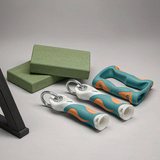







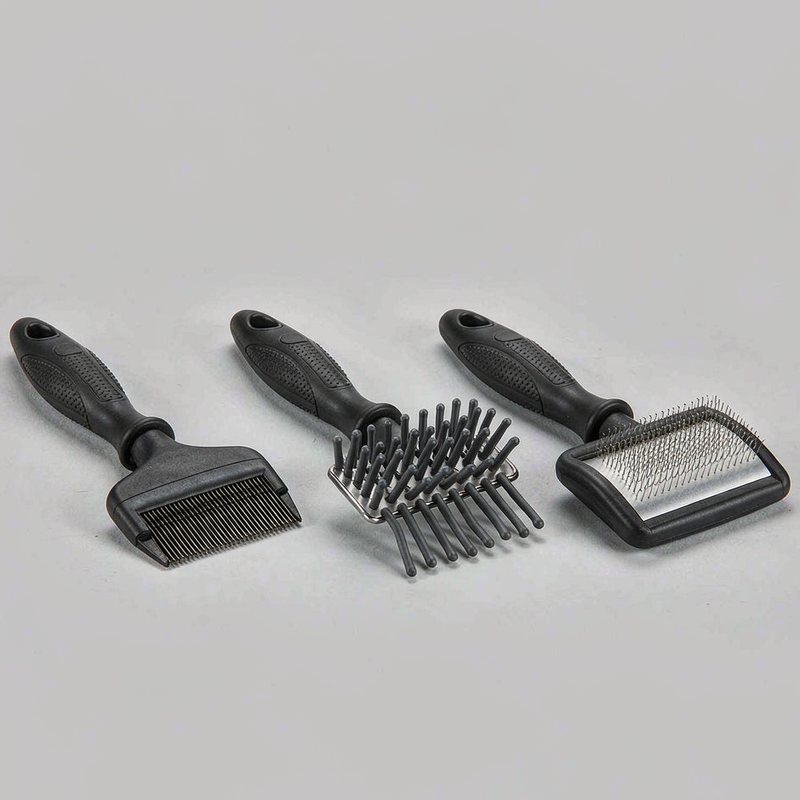

A pet grooming tool is a handle with teeth, and the teeth are the product. The teeth have to flex through a coat without pulling hair, survive a dog that decides the comb is a chew toy, and stay attached when the tool is used as intended, which is harder than it sounds because a deshedding tool is used with real force against a moving animal. The handle is the easy half; the tooth and its root are where the tool is won or lost.
We mould pet grooming combs, deshedding tools and brush handles for pet brands, grooming accessory programmes and retail programmes.
Tooth materials and what each is for
- TPR pins. The default for deshedding tools: a 40 to 60 shore A pin that bends through a coat and returns, moulded directly into the handle in a second shot or insert-moulded. Fails by pulling out at the root if the root geometry is wrong.
- Silicone pins. Softer and quieter for cats and sensitive dogs, at a higher price and a longer cycle. Used where the programme targets the premium channel.
- Stainless core with moulded overcoat. For slicker brushes where the pin has to be fine and strong; the core is inserted into the tool and over-moulded, which is the most expensive route and the most durable.
Tooth retention: the root is the specification
A tooth fails at the root in one of three ways: it pulls out, it snaps at the flex point, or it tilts and stays tilted. All three are set at the tool stage. The root is either a dovetail moulded into the handle or a bulb that is mechanically captured, and the pull force is verified on a sample basis per lot with the break mode reported, because a tooth that pulls out clean was under-supported and a tooth that snaps at the flex was over-flexed by a pin that is too thin for the material. We quote the pull force per tooth family and report against it.
Specification
| Comb | PP handle, TPR or steel teeth, fine and coarse pitches |
|---|---|
| Deshedding tool | PP handle, TPR blade or pin array, 40 to 60 shore A |
| Slicker brush | PP handle, stainless core, silicone or TPR overcoat |
| Handle grip | TPE overmould, textured, non-slip when wet |
| Chew test | Simulated chew per programme, tooth retention after |
| Packing | Header card or bulk per programme |
| MOQ | 5,000 pieces per part number |
The chew problem
Every grooming tool is eventually chewed, and the chew test decides whether the tool survives. A TPR pin bends and recovers, which is why it survives; a rigid nylon pin snaps. The handle is the other half: a thin handle cracks at the grip transition, so the grip overmould is extended back into the handle as an anchor rather than sitting on the surface. We run a simulated chew cycle on first articles and report the tooth count lost, because the retailer's complaint data on this category is almost entirely lost teeth.
Ergonomics for the groomer
Grooming tools are used by hand for twenty minutes at a time, and the grip is a design decision, not a decoration. The handle is usually a two-shot moulding with a TPE grip that has a finger-ridge pattern moulded in, and the pattern is a tool decision because a pattern that is too deep holds water and hair and cannot be cleaned. Where the programme sells to professional groomers, the handle is longer and the grip is contoured; where it sells to consumers, the handle is shorter and the price is the deciding factor.
Compliance and testing
Pet products declare to REACH for the material stream, and the compound declaration covers the TPR, the silicone and the handle PP separately. There is no mandatory toy standard for grooming tools in most markets, so the programme's own specification becomes the audit document, and we quote against the buyer's written specification rather than a standard. Where a programme sells into the EU pet channel, we also supply the food-contact-style declaration for the silicone pins, because some buyers apply it by analogy.
Related reading
Our pet feeder programme covers the feeding half of the category, and the pet products category lists the full range.