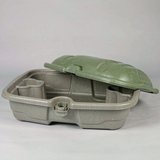







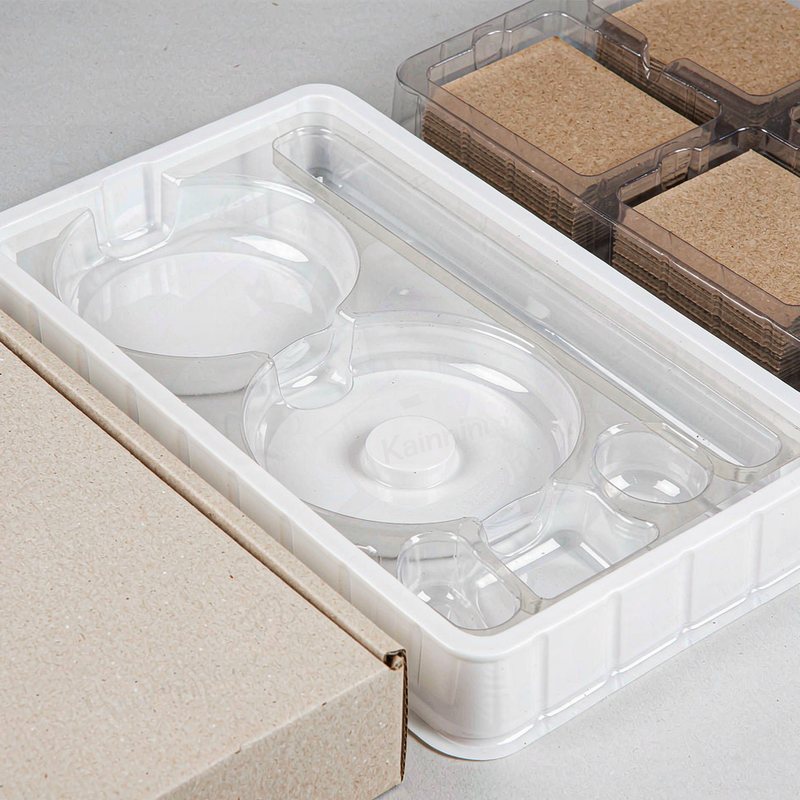

A board game is sold twice: once as a box on a shelf and once as an experience on a table, and the insert decides the second sale. A game whose tokens do not stay in their wells frustrates the player, and a game whose components cannot be packed back into the box does not get played a second time. The insert is the most undervalued moulding in the game industry and the one publishers ask about first after their first print run.
We mould game inserts, trays and organisers with retail packaging options for board game publishers, puzzle brands and game assemblers.
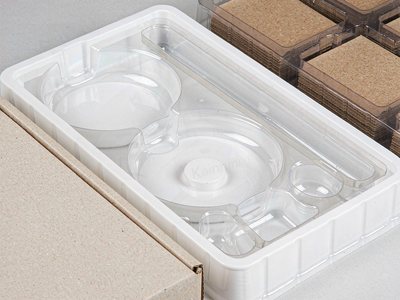
Insert design: the well is the product
An insert is a tray with wells, and the well geometry decides whether the game survives shipping and setup. Wells that are too tight make the player force components and crack them; wells that are too loose let tokens migrate in transit and arrive mixed. The tolerance is set against the component tolerance, not against the drawing, which means the insert tool is cut after the token and card dimensions are fixed, and a programme that changes the token count after the insert is cut pays for a new tool.
Material choice for inserts
- PP. The default: living hinges for a folding insert, good chemical resistance to the board coatings, and a surface that does not abrade cards.
- PET. For premium boxes where the insert is visible through a clear window; clearer and more brittle, priced accordingly.
- ABS. Where the insert has to carry structure, such as a dial or a spinner mount; stiffer and more expensive.
Specification
| Insert | PP with living hinges, well count per game |
|---|---|
| Organiser | Token wells, card slots, tray lid |
| Material | PP default, PET or ABS options |
| Retail pack | Printed box, header bag or counter tray |
| Decoration | IML or printed insert card |
| MOQ | 2,000 inserts per programme |
| Lead time | 25 days after approval |
The living hinge
A folding insert lives or dies on its hinge, and a PP hinge follows rules that a tool change cannot fix afterwards: the polymer has to flow across the hinge web rather than along it, the radius at the hinge root is generous, and no weld line may fall inside the hinge. We cycle-test hinges on the first article to the quoted count, because a hinge that passes on day one and cracks on the hundredth fold is a flow problem in the tool, not a material problem in the field.
Packaging integration
Programmes that need the retail pack as well take the printed box, header bag or counter tray through the same programme, which keeps the insert dimensions and the pack dimensions aligned. The alignment matters: an insert that fits the components but not the box is scrap, and the two tools have to be cut against the same box drawing. Where the publisher supplies the box, we mould to the box sample and ask for it before quoting.
Compliance and testing
Game inserts declare to EN 71-3 and CPSIA as the destination requires, with the compound declaration covering the colourant system. Publishers usually ask for a fit check against the component sample rather than a certificate, which we supply as a measured first-article report. The insert is also the part that protects the components in the drop test, so the programme drop test is run with the insert fitted, and we report the component condition after the drop rather than only the insert condition.
Related reading
Our board game components programme covers the dice and token family, and the puzzle category lists the full range.