





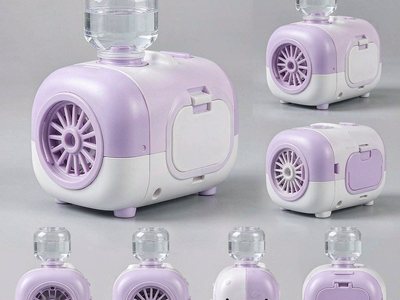

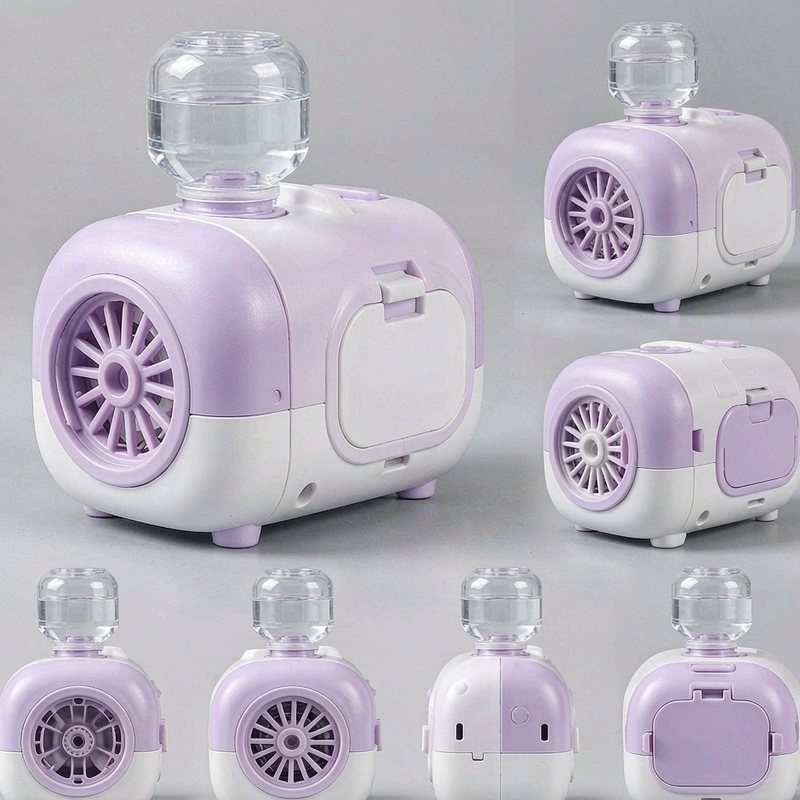

A bubble machine is a small pump with a theatre attached. The mechanism that matters is the dip wheel: it has to lift a film of solution, present it to the airflow without shredding it, and keep doing so after the bottle has been knocked about. Everything else — the shell, the fan, the battery cover — is standard housing work. We tool the wheel and gear train first, then build the shell around them, because the reverse order produces housings that fit beautifully and leak at the bottle neck.
The programme covers hand-held blasters, table-top fans with dip wheels, and the wand-style machines that swing a ring through a soap film.
Dip wheel design
The wheel is moulded in ABS with a ribbed rim that carries a meniscus of solution rather than a flood. Rim geometry is specified by rib pitch and depth, both cut in the tool, so the film thickness is a moulding decision rather than a bottle-formula decision. Where the design uses a ring wand, the ring runs on a moulded track with a drip channel that returns surplus solution to the bottle, because a wand that sheds into the motor bay kills the unit in a week.
- Ribbed wheel rim sized to carry a film, not a flood
- Wand tracks with drip channels returning surplus to the bottle
- Wheel and bottle neck moulded as a matched pair, tolerances locked together
- Fan shroud angle set so airflow crosses the film, not through it
Gear train and motor mount
The drive is a two- or three-stage gear train in POM running on moulded bosses in the same tool as the housing, with the motor mount specified for shaft alignment rather than screw position. Backlash is set per stage and recorded in the first-article report, because a bubble machine that whines is returned even when it still blows bubbles. The motor bay is drained and vented: a vent channel runs from the bay to the outside, and the battery cover sits above the drain line so a tipped bottle floods the bay without reaching the contacts.
Leak paths and drainage
Solution will get everywhere; the design question is where it goes. The bottle neck seal is a moulded lip plus a compressed gasket rather than glue, the fill cap is specified with a positive click so a child can hear it close, and the shell joint line is kept above the maximum fill level. Drainage slots are moulded at the bay floor and tested by tipping the assembled unit on a fixture before packing.
Compliance
Bubble programmes are produced to the toy safety standard the buyer nominates — EN71 for Europe, ASTM F963 and CPSIA for the United States — with the battery cover specified tool-required and the solution bottle specified food-contact grade where the buyer supplies the liquid. We supply the hardware; liquid formulation and its documentation stay with the buyer's nominated supplier.
Specification
| Wheel | ABS ribbed dip wheel or ring wand on moulded track |
|---|---|
| Drive | POM two or three stage gear train, motor boss in same tool |
| Housing | Two-shell ABS or PP, joint line above max fill level |
| Battery | 2 or 4 AA cover, tool-required, above drain line |
| Drainage | Bay floor slots plus vent channel, tip-tested on fixture |
| Safety | EN71-1/2/3, ASTM F963, CPSIA as nominated by buyer |
| MOQ | 1,000 pieces per machine, 3,000 for a new wheel platform |
| Tooling | 35 to 45 days for wheel, gear family and shell pair |
Platform reuse
The wheel-and-bay subassembly is the platform: the same wheel, gear train and drained bay carry a hand-held blaster, a table fan and a wand machine with different outer shells. We quote the platform as one tooling package and the shells as separate tools, which is how a buyer extends a bubble range across three retail price points without tripling the tooling bill.
For adjacent outdoor programmes, see our water blaster programme or the Outdoor & Water Toys category.