Where GF25 sits in the glass-filled nylon ladder
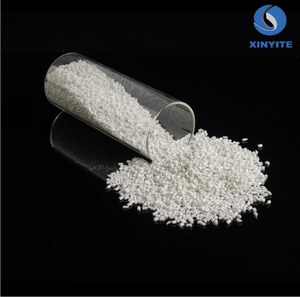
Glass-filled nylon is sold as a ladder of fiber contents — GF10, GF15, GF25, GF30, GF50 — where the number is the percentage of glass fiber by weight. Nylon 6 GF25 contains 25% glass fibers embedded in a polyamide 6 matrix, and the source positions it as the balanced configuration: enough reinforcement for demanding applications, without the premium pricing of GF30 or GF50. For B2B buyers, the grade answers a specific question: what do you specify when pure nylon is too soft and GF30 is too expensive?
The commercial backdrop supports that positioning. The global glass-filled nylon market is projected to grow from USD 2.12 billion in 2025 to USD 3.69 billion by 2034 at an 8.6% CAGR, with Asia-Pacific as the fastest-growing region (as cited). Industry analysis notes that glass content of 20–30% is the most common range for industrial applications, which places GF25 squarely in the volume segment of the ladder rather than at the exotic ends.
The verified property envelope
The datasheet values cited for GF25 consolidate into the following envelope:
| Property | Pure PA6 | PA6 GF25 | PA6 GF30 |
|---|---|---|---|
| Tensile strength | 80 MPa | 180 MPa | 180–200 MPa |
| Flexural modulus | 3.2 GPa | 5,700–8,500 MPa | 8,000–9,500 MPa |
| Density | 1.14 g/cm³ | 1.35–1.39 g/cm³ | 1.38–1.42 g/cm³ |
| Heat deflection temperature | 70–85°C | 150°C | 150–200°C |
| Notched Charpy impact | 5–6 kJ/m² | 10–12 kJ/m² | 12 kJ/m² |
| Elongation at break | 60–100% | 3.5% | 2.5–3.0% |
| Volume resistivity | — | 10¹⁵ Ω·cm | — |
| Max continuous service temperature | — | 150°C | — |
Two rows decide most programs. The jump in tensile strength from 80 MPa to 180 MPa is the structural claim — this is a grade for brackets, housings, and load paths, not cosmetic covers. The heat deflection temperature of 150°C (versus 70–85°C unfilled) keeps parts stiff through under-hood and warm electrical enclosures that disqualify commodity nylons. The trade-off is equally visible: elongation collapses from 60–100% to 3.5%, so GF25 parts are stiff and dimensionally stable but not tough in the unfilled sense. Our nylon 66 GF60 guide covers the higher-stiffness end of the family, and the talc-filled nylon 66 guide covers the mineral-fill alternative.
One further verified data point matters for cyclic duty: PA6 GF30 shows fatigue strength of 90 MPa at 10⁶ cycles, and the source states GF25 offers comparable performance for most industrial applications — relevant for automotive and machinery parts subject to vibration.
Applications: automotive, electrical, industrial
The source maps GF25 onto four segments where balanced properties are the requirement:
- Automotive — under-hood components, intake manifolds, engine covers, and structural brackets that need heat resistance up to 150°C and dimensional stability at a cost below GF30. Where loads run higher, GF30 or PPA above 180°C takes over.
- Electrical and electronics — connector housings, switch components, cable management, and enclosures, where volume resistivity of 10¹⁵ Ω·cm combines insulation with mechanical strength.
- Industrial — heavy-duty handles, gears, bearings, pump housings, and wear-resistant parts; the source datasheet specifically notes suitability where "good strength and stiffness with good impact properties" are required. For dry sliding duty, our self-lubricating plastics guide compares PTFE- and MoS₂-modified options.
- Consumer goods and 3D printing — power tool housings and appliance components where balanced strength and cost matter; in filament form, PA6-GF prices run from USD 17.99 (0.5 kg) to USD 39.99 (1 kg), a 30–50% premium over unfilled nylon filament.
Processing: drying is not optional
Glass fiber does not change the one rule that governs all polyamide processing: nylon is hygroscopic, and GF25 must be dried before molding. The source specifies 80–95°C for 12–24 hours, and buyer feedback collected in the same source is blunt about the consequence — one verified purchaser reported material arriving moisture-laden and needing close to 24 hours of drying before it printed correctly, and another 1-star review describes material "full of moisture" straight out of the box. For 3D printing, the source adds that hardened steel nozzles are required, because glass fiber abrades brass; a widely upvoted r/3Dprinting thread (2,578 upvotes) documents exactly that failure. Processing detail is covered further in our injection molding process guide.
Cost structure and pricing position
The source breaks the raw material cost of glass-filled polyamide into 55–65% PA resin, 25–30% glass fiber, and the remainder additives and processing, with raw materials totaling 75–80% of production cost. Against that structure, GF25 commands approximately 20–35% higher pricing than pure PA6 in B2B molding, while carbon-fiber PA6-CF30 costs 2–3× GF30 — which is precisely the gap GF25 occupies: premium enough to justify margin over commodity resin, accessible enough for mid-volume buyers. Regional sourcing adds leverage: the source notes overseas (particularly Asian) suppliers quote tooling 30–50% below US-based molding, with faster iteration the trade-off on the US side.
Specification and sourcing checklist
For RFQs, anchor on the envelope above. Confirm the glass content is genuinely 25% by weight, request lot-specific datasheets rather than family typicals, and specify drying regime (80–95°C, 12–24 h) in the molding agreement rather than leaving it to the processor. Where moisture exposure is the dominant risk rather than stiffness, compare against PBT — our PBT resin sourcing guide covers the better-moisture-resistance alternative — and against nylon 612, covered in our nylon 612 low-moisture guide. For conductive or ESD duty, step up to the carbon-filled nylon 66 guide. And where impact dominates over stiffness, polycarbonate remains the reference: see our polycarbonate sourcing guide.
Related product categories
The materials and part types discussed above are grouped in our sourcing directory: