







Novelty and gag toys are a packaging business with a moulding department attached. The product is bought on impulse at a counter, which means the pack is the product: the part has to look like something through a printed card or a blind bag, and it has to survive a supply chain built for gift shops and vending rather than for toy stores. The moulding is usually simple; the pack format and the vending tolerances are what decide the programme.
We mould novelty and gag toy components with retail packaging options for gift programmes, vending operators and promotional buyers.
Moulding for impulse retail
The parts are small, high-cavitation and usually single-material, because the margin on a counter novelty is measured in cents and a second shot does not fit it. PP is the default for flexible parts and ABS for rigid ones, and the tool is cut for the cavitation the programme needs from day one, because a 4-cavity tool that should have been 16 makes the part price wrong for the life of the programme. Where a mechanism is involved, it is a moulded living hinge or a snap action rather than a metal spring, again for cost.
Packaging formats that sell at a counter
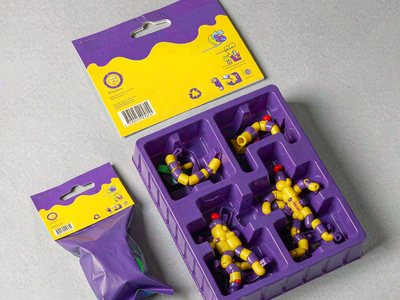
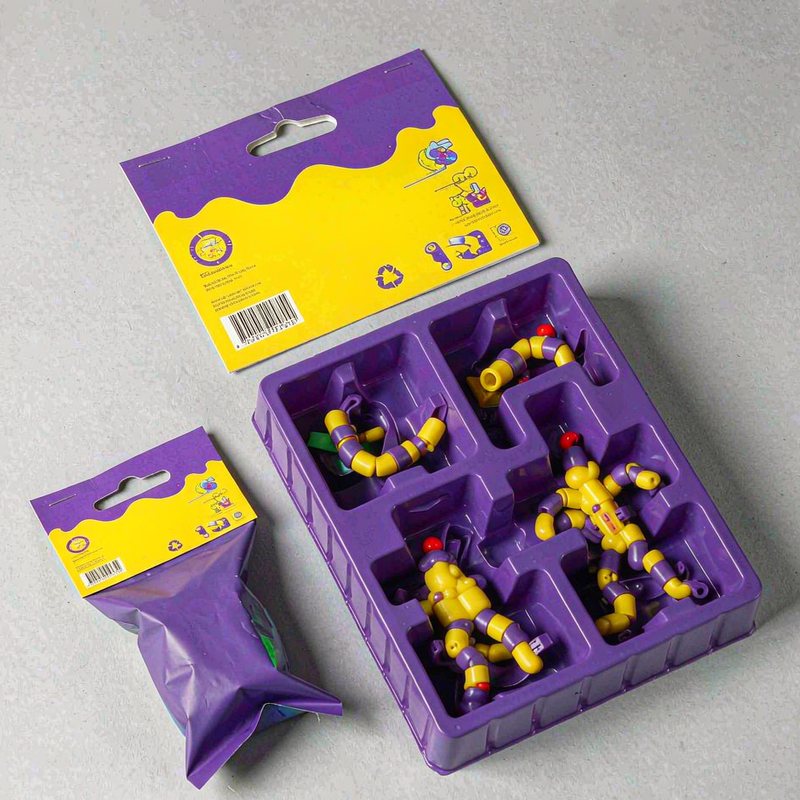
- Header card. The default for gift shops: the part is visible, the card carries the joke, and the hanging hole is moulded or die-cut into the card rather than added later.
- Blind bag. For vending and assortments: the part is not visible, so the bag print carries the sale, and the bag has to be sized so a child can open it without tools.
- Counter display. A moulded tray or shipper that holds 24 to 48 units and becomes the merchandising, quoted as a fourth part number in the programme.
Specification
| Component | PP or ABS, single material typical |
|---|---|
| Mechanism | Living hinge or snap action, moulded |
| Header card | Printed card, hanging hole, blister or bag |
| Blind bag | Printed polybag, child-openable |
| Counter display | Moulded shipper or tray, 24 to 48 units |
| Packing | Bulk to display builder or pre-packed |
| MOQ | 5,000 pieces per part number |
Age grading for the counter channel
Gift-shop novelties are bought by adults for adults as often as for children, but the age grading still has to cover the child who opens the till drawer. Small parts in a gag toy drive the grading, and a programme sold through a channel that also serves children should grade conservatively and print it on the pack. EN 71 covers the mechanical and chemical side, and the compound declaration is per material lot as usual.
Lead time and the seasonal window
Novelty programmes run to a season: the counter display has to be in the shop before the window opens, and the window does not move. Tooling build runs four to six weeks and repeat lots run 20 days, which means the programme schedule is set by the display delivery date and worked backwards. Programmes that miss the window carry the parts for a year at a cost that usually exceeds the moulding cost, so we ask for the in-shop date before quoting the schedule.
Vending and assortment tolerances
Vending programmes add a tolerance the gift-shop channel never sees: the part has to fall through a chute of a stated diameter without bridging, which caps the overall envelope and rules out any protrusion that can catch. We quote against the chute dimension the operator supplies, and the cap dimension is checked on the first article with the actual part rather than a drawing. Assortment programmes add a mix requirement, where each counter display has to contain the stated mix of part numbers, and the mixing is done at the display build with a weigh-count per well rather than a visual estimate.
Related reading
Our silicone fidget programme covers the desk-toy half of the category, and the novelty toy category lists the full range.