







Product Description
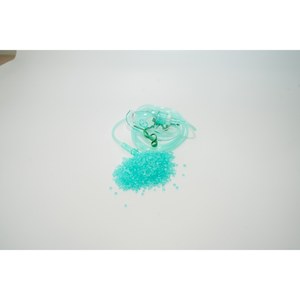
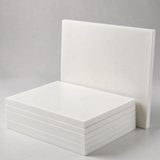
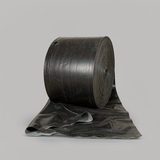
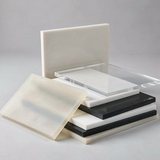
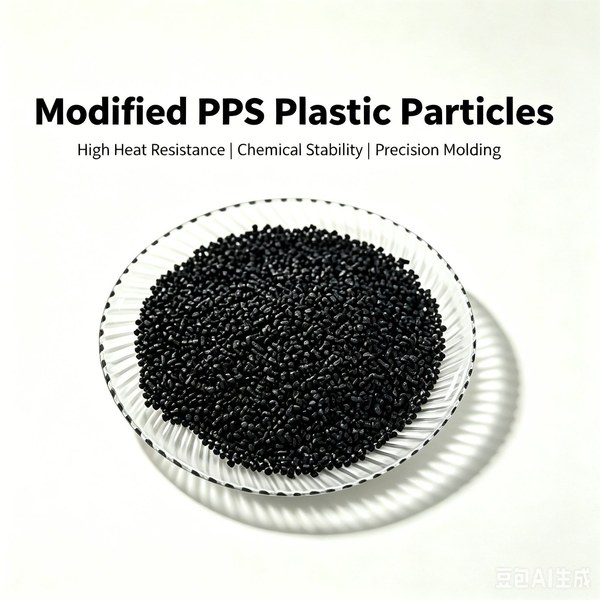
Glass fiber reinforced Polyphenylene Sulfide (PPS) is a high-performance thermoplastic composite material. It is mainly applied in harsh environments requiring high temperature resistance, corrosion resistance, high rigidity and excellent dimensional stability.
Main Application Fields
Automotive Industry
It is used to produce peripheral engine parts such as sensors and connectors, pump bodies, valves and transmission components. Featuring outstanding heat, oil and chemical resistance, it can replace metal materials to achieve lightweight design, meeting the electrification and lightweight development demands of the automotive industry.
Electronics & Electrical Engineering
This stands as one of the core application sectors for glass fiber reinforced PPS. It is widely adopted for precision electronic components including chip substrates, connectors, sensor housings, relays and coil bobbins. As glass fiber is non-conductive, the material boasts unique advantages in 5G communication devices, radar shells and antenna brackets, eliminating signal shielding issues caused by carbon fiber reinforced materials.
Industrial Equipment & Home Appliances
In industrial scenarios, it is applied to high-precision mechanical structural parts, chemical corrosion-resistant components and aerospace parts. For home appliances, it is used for heat-resistant and flame-retardant parts. It also serves for parts demanding long-term dimensional stability such as drone fuselage shells.
PPS inherently achieves V-0 flame retardancy, ultra-low moisture absorption and great resistance to various chemical solvents and acids. The addition of glass fiber greatly enhances its mechanical strength and rigidity. Compared with high-end specialty plastics like PEEK and PEI, glass fiber reinforced PPS delivers comparable performance at a much lower cost, making it an ideal choice balancing performance and price for numerous industrial applications.
Feel free to enquire about technical details and material selection in specific fields such as automotive and electronics.
| Technical Data Sheet | ||||
| PPS+50GF S265G10 | ||||
| PPS (polyphenylene sulfide) glass fiber reinforced material is a high-performance thermoplastic composite material, which is widely used in harsh environments such as the automotive industry, electronic appliances, industrial and household appliances that require high-temperature resistance, corrosion resistance, high rigidity and excellent dimensional stability. | ||||
| Physical Properties | Typical Value | SI . Unit | Test Condition | Test Standard |
| Density | 1.69 | g/cm³ | 23°C | ISO 1183 |
| Humidity absorption | 0.02 | % | 23°C, 50% RH | ISO 62 |
| Molding shrinkage | 0.3 | % | Parallel | Internal methods |
| Molding shrinkage | 0.6 | % | Normal | Internal methods |
| Mechanical Properties | Typical Value | SI . Unit | Test Condition | Test Standard |
| Tensile stress | 165 | MPa | 23°C,5mm/min,Brk | ISO 527 |
| Strain at break | 3 | % | 5mm/min, Brk | ISO 527 |
| Flexural stress | 285 | MPa | 23°C,2mm/min | ISO 178 |
| Flexural modulusress | 16000 | MPa | 23°C,2mm/min | ISO 178 |
| Charpy impact strength | 55 | kJ/m² | 23°C, 1eA | ISO 179-1 |
| Notched Charpy impact strength | 12 | kJ/m² | 23°C, 1eA | ISO 179-1 |
| Notched Izod Impact Strength | 11 | kJ/m² | 23°C | ISO 180 |
| Thermal Properties | Typical Value | SI . Unit | Test Condition | Test Standard |
| Temperature of deflection under load | 265 | °C | 1.8 MPa | ISO 75 |
| Melting temperature | 285 | DSC10°C/min | 23°C | IS0 11357-1/-3 |
| Electrical Properties | Typical Value | SI . Unit | Test Condition | Test Standard |
| Insulation resistance | ≥10E6 | MΩ | 23°C 50%RH ;DC 1KV,60S | IEC 62631-3-3:2015 |
| Withstand voltage leakage current | <0.5 | mA | 23°C 50%RH ;AC 3KV,60S | IEC 60243-1:2013 |
| Volume resistivity | >10E13 | ohms*cm | 23°C | IEC60093 |
| Surface resistivity | >10E13 | ohms | 23°C | IEC60093 |
| Flammability Properties | Typical Value | SI . Unit | Test Condition | Test Standard |
| Flame class | V-0 | - | 1.5 mm | UL94 |
| Flame class | V-0 | - | 3.0 mm | UL94 |
| Processing Conditions | Typical Value | SI . Unit | Test Condition | Test Standard |
| Drying temperature | 130-150 | °C | ||
| Drying time | 2~4 | hr | ||
| Rear zone temp. | 290-300 | °C | ||
| Middle zone temp. | 300-310 | °C | ||
| Front zone temp. | 310-320 | °C | ||
| Nozzel temp. | 300-320 | °C | ||
| Special instructions [1] The TDS provided here is based on our existing knowledge and experience which has been tested in our materials laboratory. We can guarantee the authenticity of the test result. [2] The data provided in TDS only represents the typical value of the product and should not be used as the technical certificate of the material. Since human, machine, material, method, environment and other factors during material processing and testing will affect the judgment and application of materials, this TDS only provides technical reference for engineers in selection or processing. In order to achieve the expected effect of your company, it is necessary to conduct experiments. [3] The shrinkage value provided in TDS is measured according to the international standard shrinkage film, which will be different from the tooling shrinkage of the actual product. So that the shrinkage value is only used for reference. If you need sample resines, please contact the relevant personnel of our company. [4] Pigments may affect the properties , unless otherwise specified, the data in TDS represent the properties of the naturel /black color material. [5] With the accumulation of our knowledge and experience, the TDS will be updated constantly. In order to obtain the latest version please contact our sales and service personnel directly. |
||||