




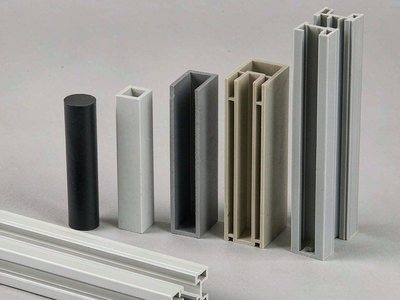

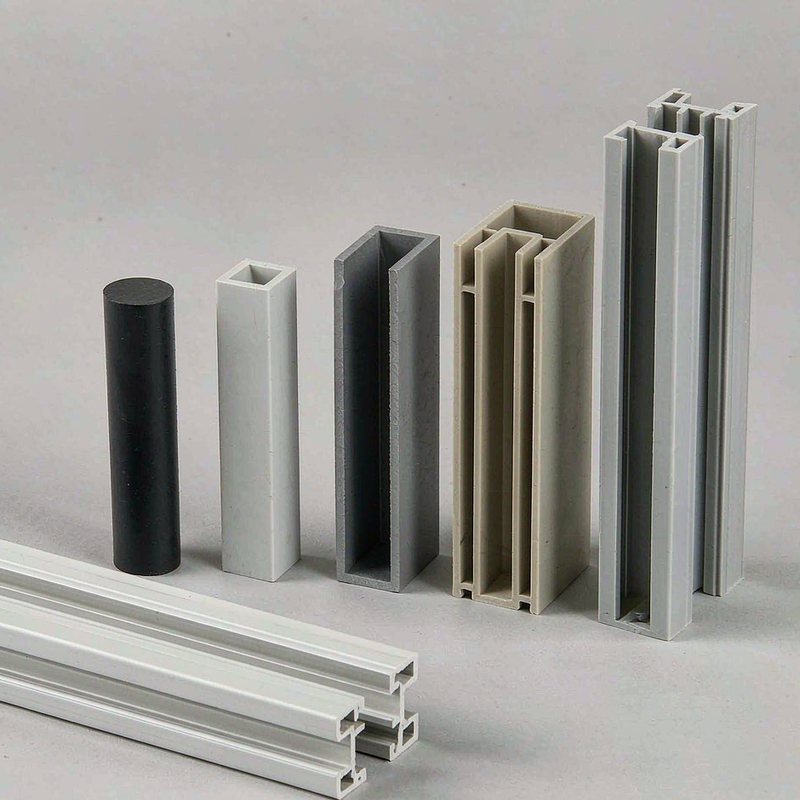

Extrusion is the right process for a part that is long in one direction and constant in cross section: a rod, a tube, a U channel, a window profile, a trim strip. We extrude in PVC, ABS, PP, PS and HDPE, cut to length, and supply the cross-section drawing with the first article so the buyer's tooling can be designed around a known profile.
What we extrude
- Solid rods and bars in any of the five base materials
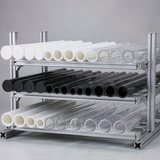
- Round and rectangular tubes, including ribbed and corrugated
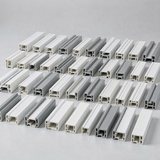
- Open profiles: U channel, T slot, J section, H section
- Closed hollow profiles with internal ribs or chambers
- Co-extrusions: rigid core with a soft skin, or two colours
Why the cross section drawing matters more than the sample
A sample tells you what the profile looks like; the drawing tells you what every dimension is, including the ones you cannot measure on a cut end. Buyers who design fixtures and cutting tools against a measured sample rather than a drawing usually discover the discrepancy on the thousandth part. We issue the drawing, and the drawing governs.
Specification
| Materials | PVC rigid or flexible, ABS, PP, PS, HDPE |
|---|---|
| Profile size | Up to 300 mm across, wall from 0.8 mm |
| Tolerance | ±0.10 mm on critical dimensions, ±0.30 mm on overall |
| Straightness | 1 mm per metre standard, tighter on request |
| Length | Cut to any length from 100 mm to 6 m |
| MOQ | 2,000 m per profile, or 500 m for a small cross section |
Die design and colour change
The die is where the profile is defined, and a die that works for PVC will not necessarily work for ABS, because the two materials swell differently on exit. We design and cut the die per material and per cross section, and we keep the die with the profile so repeat orders do not restart the development. Colour change runs a purge cycle, which is why a repeat order in a new colour has a shorter lead time than the first order but is not instant.
Outdoor and weathering grades
For profiles that will see sunlight, we can supply ASA or ASA/PMMA capped PVC, or UV-stabilised ABS, and we run a QUV exposure test on new formulations before release. The cap layer is a co-extrusion, not a paint, so a scratch does not expose the substrate. For internal profiles the standard grade is usually sufficient, and the decision is worth making explicitly rather than defaulting to the capped version.