






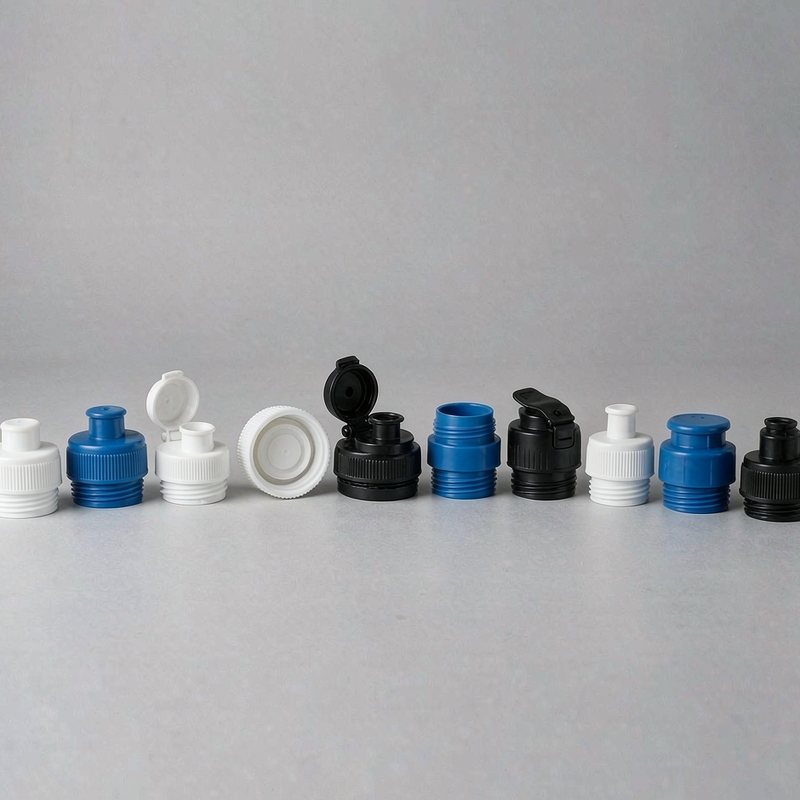

Every closure programme starts from a neck finish, and the finish is usually not the buyer's to choose: the bottle, the preform or the existing package dictates it. What the buyer chooses is the closure that runs on that finish, and the closure is a tooling decision before it is a production one. A closure tool is cut for one finish family and one thread form, so the finish has to be settled before the steel is ordered, because a programme that changes finish mid-stream buys a new tool rather than a new setting.
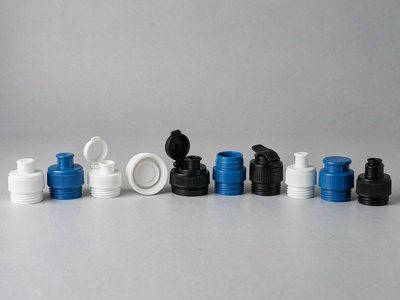
We build tooling and produce closures for custom neck finishes: PCO 1881, 24/410, 38/400 and programme-specific geometries.
Finish families and what each demands
- PCO 1881. The carbonated soft-drink standard: a one-start thread with a retention bead, moulded in PP with a liner or a land seal. The thread form is standardised, so the tool investment is in the sealing surface and the tamper band rather than the thread.
- 24/410 and 38/400. The continuous-thread family for household and personal care: a moulded thread that has to run smoothly on a moulded or a cut neck, with the sealing surface either a liner well or a moulded land.
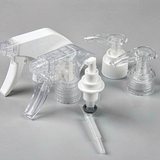
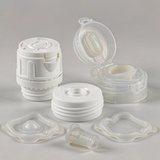
- Programme-specific finishes. Child-resistant and dispenser finishes where the neck is part of the function; the tool carries the functional features and the programme owns the design.
The sealing surface is the tool
A closure leaks or holds at its sealing surface, and the surface is a tool decision that no process step can correct. For a liner closure, the tool cuts the liner well to the depth the liner's compression needs; for a land-seal closure, the tool cuts the land to the interference the neck finish tolerates. Both are verified on the first article against the buyer's neck or bottle sample rather than against the drawing, and we ask for that sample before quoting, because a land that gauges correctly can still leak on a neck with a moulded-in flash line.
Specification
| PCO 1881 | PP, one-start thread, retention bead, liner or land seal |
|---|---|
| 24/410 | PP or HDPE, continuous thread, liner well |
| 38/400 | PP or HDPE, continuous thread, ribbed grip |
| Flip top and sports | Two-shot or assembled, per programme |
| Thread gauging | GO/NO-GO per lot on the production neck |
| Sealing | Torque and leak verified per lot |
| MOQ | 50,000 pieces per finish and colour |
Tamper bands and the application window
Tamper-evident closures carry a band that either breaks or splits on application, and the band is the part of the tool that the application line judges. The band bridge geometry sets the break torque, and the break torque has a window: too low and the band fails in transit, too high and the consumer cannot open the bottle. We quote the break torque window with the tool and verify it per lot with a torque bench, and programmes that run their own capping line send us their capper's settings so the tool is cut to the application window rather than to a generic spec.
Tooling model
Closure tools are high-cavitation, usually 16 to 32 cavities, with the cycle set by the sealing surface's cooling rather than the fill. Tool build runs five to seven weeks because of the thread form and the band bridge, and the tool is quoted separately so the programme can approve the part price and the tool independently. Where a programme expects to run several finishes from one shell, the family tool approach is quoted: one shell geometry with interchangeable thread inserts, which costs more up front and less per finish over the programme's life.
Compliance
Closures declare to FDA 21 CFR 177.1520 and EU 10/2011 as the destination and the product class require, and the declaration covers the closure resin and the liner or seal material as separate lots. Food-contact programmes confirm the product class before the tool is cut, because the migration file follows the class, and child-resistant programmes own the functional testing that their market requires, which is a programme-level test rather than a material declaration.
Related reading
Our closure programme covers the standard finish family, and the closures category lists the full range.