







A fitment is the part of the package the consumer actually operates, and it is judged by two numbers: the dose it delivers and the seal it holds. A sprayer that drifts 20 percent high empties the bottle before the label claims and generates complaints; a pump that weeps at the gasket fails on the shelf before it is ever used.
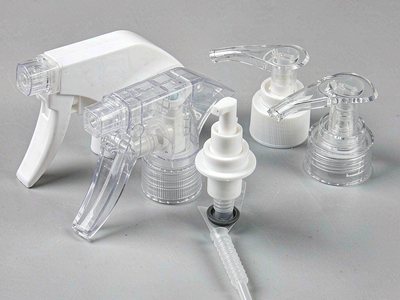
We mould and assemble trigger sprayer and lotion pump fitments for household chemical, cosmetic and personal care programmes, with dosage control and gasket declarations as part of the spec.
Anatomy of the fitment
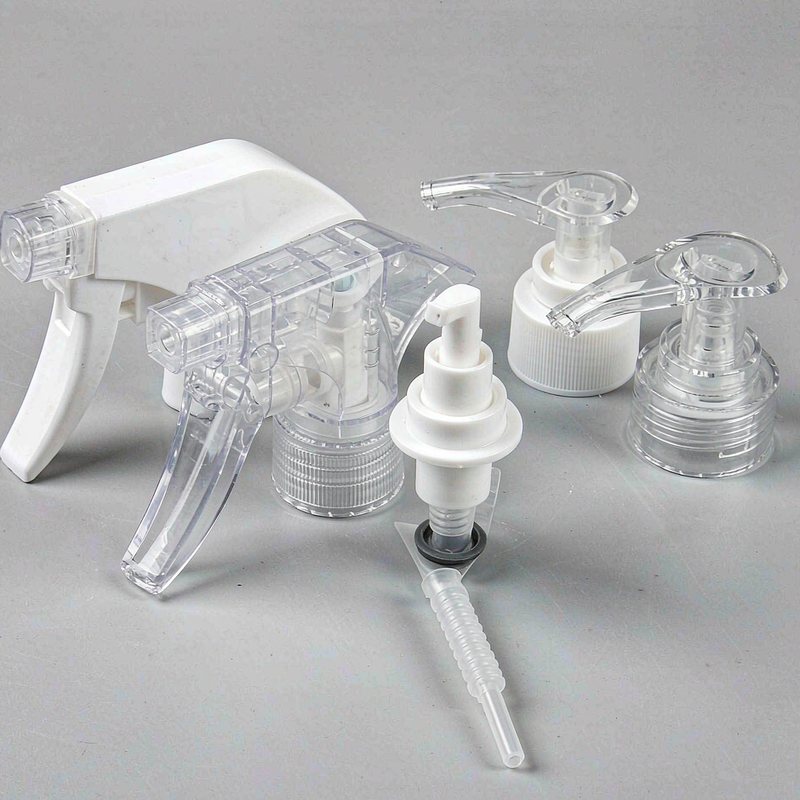
The fitment is five moulded parts and a spring: the sprayer insert with its orifice, the gasket, the dip tube, the trigger or pump head, and the closure. Each part is a separate tool, which is why fitment programmes are quoted as a family rather than as a single piece price, and why the gasket, the cheapest part in the set, is the one that decides the programme's leak performance.
Dosage control
Dosage is set by the chamber volume and the orifice, and it drifts for moulding reasons: a flash lip inside the chamber reduces the effective volume, a gasket that sits proud changes the stroke, and an orifice that is off by a tenth shifts the spray pattern. First articles are dosed on a test rig across the stroke, and the acceptance is plus/minus 5 percent of the target dose on ten consecutive actuations. Where the label claims a volume, the claim is verified against the actual dose before the run is released.
Specification
| Types | Trigger sprayer, front and rear trigger; lotion pump |
|---|---|
| Dosage | plus/minus 5 percent of target, verified per lot |
| Neck finish | 24/410, 28/410, 24/415, per drawing |
| Gasket | PVC-free LDPE or PTFE laminate |
| Spring | Stainless or PP, per product chemistry |
| Leak test | Pressure and vacuum check per lot |
| MOQ | 20,000 pieces per configuration |
Gasket compounds and chemistry compatibility
The gasket sees the product, and the product decides the compound. Solvent-based cleaners attack PVC-free LDPE gaskets over time and need a PTFE laminate; oil-based cosmetics need a compound that does not plasticise and swell. The fitment quote includes the gasket compound declaration against the buyer's product chemistry, and where the chemistry is aggressive the programme is quoted with the laminate and a soak test rather than with the cheapest gasket.
Spring selection
A stainless spring is the default and the cheapest to source, but it corrodes in bleach and oxidiser programmes and sheds rust into the product. For those, a PP spring is quoted: it survives the chemistry, and it costs more per piece because it is moulded rather than bought. The spring choice is a chemistry decision made at quotation, because a stainless spring that fails in the field takes the whole fitment family with it.
Neck finish compatibility
The fitment thread and the bottle neck are matched by finish code, and the code hides two details: the thread engagement and the support ring dimension. A fitment that threads onto a 24/410 neck from one moulder may seat differently on a neck from another, because the support ring tolerance varies. The fitment programme is quoted with the buyer's bottle neck drawing, and where the programme runs bottles from more than one source, the fitment is verified against each neck.
Assembly cleanliness and leak testing
Fitments are assembled on a line where the parts are visible and the operator can see flash, and every lot is leak-tested: pressure to check the seal, vacuum to check the dip tube seat. The test is destructive on a sample basis and non-destructive at 100 percent where the programme requires it. Fitments that will see food contact are assembled in a controlled area with the handling standard stated, because a fitment is a food contact part on a sauce or dressing bottle and the buyer's certification expects it.
Related reading
Our child resistant closure programme covers the security closure family, and the caps, closures and fitments category lists the full range.